Most Indians live in the district where they were born
India can't rely on aggregate state and national numbers — we have to make every single district work.
Reproduced from the original ↗
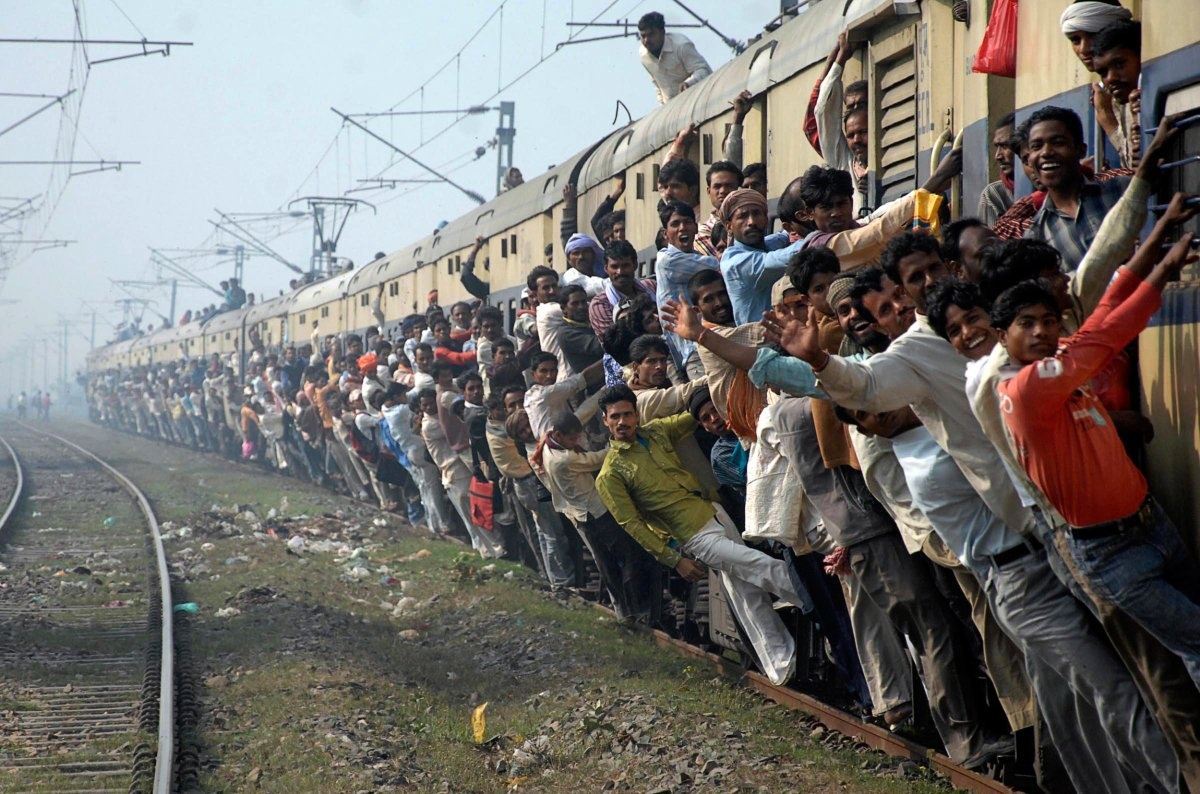
It's hard to be in India and not feel like its entire population is on the move. Cities are overflowing with people, and every day our trains and buses carry masses of people to urban centers.
Yet while the absolute numbers of migrants are astounding, a vast majority of people never leave the district in which they were born. In the 2011 Census, just over a third of Indians were migrants — and the bulk of that movement was local. Of all migrants, about 62% had moved only within their own district and another 26% within their home state; only about one in eight had crossed a state border.12
The trend has continued downward. Over the decade the migration rate fell from about 37.6% of the population to 28.9%.34
This decline could be due to cities becoming "less welcoming to migrants" through a "process of sanitisation and formalisation",5 or to "improved conditions and opportunities at the places of origin".4
Irrespective, when we put these numbers together the picture is striking: in the 2011 Census, about 85% of Indians were living in the district where they were born — and with migration falling since, more do today.1
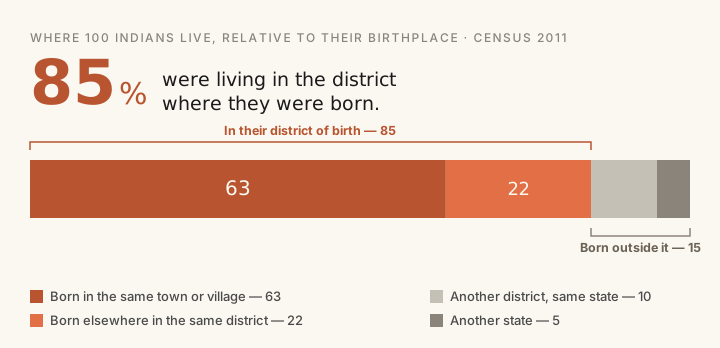
This has large implications for how we think about development and governance. It means we cannot rely on aggregate state and national numbers. We have to make every single district work — at least on the fundamentals of education, skilling, and employment for our youth — or we leave very large numbers behind.
That is the focus of Future of India Foundation's work: to bring development back to the district, and to ensure that all of India's youth get a real opportunity to take part in the country's growth, wherever they happen to live.
You can explore your own district on YouthPOWER.
Footnotes
-
Census of India 2011 — population by place of birth, and migrants by place of last residence. By place of birth, 84.9% of the population was living in its district of birth. ↩ ↩2
-
World Bank, "Internal Migration in India Grows, But Inter-State Movements Remain Low." ↩
-
Migration in India 2020-21, Ministry of Statistics and Programme Implementation (migration rate 28.9%). ↩
-
Economic Advisory Council to the Prime Minister, Working Paper EAC-PM/WP/35/2024, "400 Million Dreams!" (migration rate estimated at 28.9%). ↩ ↩2
-
Amitabh Kundu, on exclusionary urbanisation and the "sanitisation" of Indian cities. ↩