~14 min read
11. A worked example: a mandate map for one observed problem
In Month 4 you submit a Mandate Map. The map takes one observed issue in your district, breaks it into the stages where it actually gets stuck, and walks through each stage and each relevant actor on three questions: does this stage fall within their mandate; what action is within their authority on this matter; what is the right form of engagement. The exercise then identifies the most direct actor for at least one stage and designs a specific, respectful engagement with them. The point is to learn that a structural issue is moved through democratic and institutional process over time, not solved in a single ask.
This section walks through one such map using a hypothetical but realistic example.
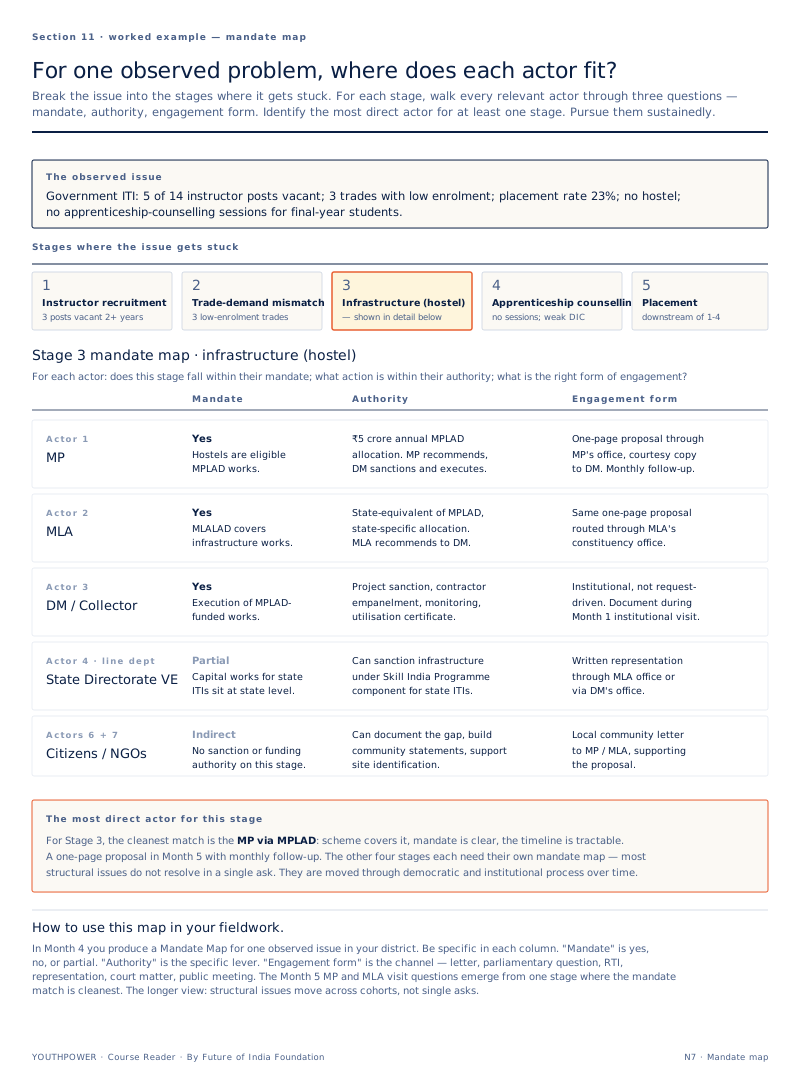
The observed issue
In a district in eastern Uttar Pradesh, the fellow has visited the Government ITI three times across two months. The fellow's documented findings:
- The ITI runs eight trades. Five trades are full or near-full. Three trades (Welder, Mechanic Tractor, Sheet Metal Worker) have low enrolment, between 15% and 40% of sanctioned seats.
- Five of fourteen instructor posts are vacant. The Welder, Mechanic Tractor, and Sheet Metal Worker instructor posts have been vacant for over two years.
- The ITI has no hostel. Students from blocks more than 25 kilometres away cannot attend regularly.
- The placement rate for the 2024 batch was 23%.
- The ITI building has 2008-09 equipment for most trades. CNC machines from a 2021 World Bank scheme are functional but cover only one trade.
- The ITI is not running apprenticeship-counselling sessions for final-year students.
The fellow's question is not "who can help" — that framing flattens an issue that lives at multiple stages. The fellow's question is: at which stages does this issue actually get stuck, and for each stage, which actor's mandate covers what action, and through what form of engagement?
Stages where the issue gets stuck
The fellow breaks the ITI's situation into the distinct stages it crosses:
- Instructor recruitment. Three posts vacant for over two years. Sanctioning, recruitment, and posting all sit at state-government level.
- Trade-demand mismatch. Three low-enrolment trades persist while Electronic Mechanic-type demand goes unmet. Trade reorientation requires sanction at state level and capacity at the institution.
- Infrastructure (hostel). No hostel restricts enrolment from far blocks. Capital works route through MPLAD, MLALAD, or state infrastructure schemes; execution sits with the Collectorate.
- Apprenticeship counselling and employer linkage. No counselling sessions; weak DIC outreach; portal friction for small MSMEs. Sits across DSDO, DIC GM, and the institution head.
- Placement. The 23 percent rate is downstream of all the above; stage-specific intervention requires fixing the upstream stages first, plus parallel employer engagement.
The mandate map
For each stage, the fellow walks through the actors and the three questions: mandate, authority, engagement form.
Stage 1 — Instructor recruitment
- State Directorate of Vocational Education. Mandate: yes — sanctioning and recruitment of instructors at state ITIs is squarely within their mandate. Authority: can sanction recruitment, expedite hiring through the State Public Service Commission, post existing instructors. Engagement form: a written representation through the MLA office, or an Assembly question.
- MLA. Mandate: partial — the MLA has the standing to escalate state-level vacancies on behalf of the constituency. Authority: Assembly question, written representation to the State Minister, MLALAD where capital is involved. Engagement form: Assembly question is the most direct.
- MP. Mandate: state ITI recruitment is not within central mandate, but the central component of Skill India Programme funding to state ITIs is. Authority: parliamentary question on the funding line, DISHA documentation. Engagement form: parliamentary question + DISHA review.
- DM. Mandate: no programmatic authority over state directorate recruitment. Authority: can write to the directorate, can convene district review. Engagement form: convening + written request, not direct order.
Stage 2 — Trade-demand mismatch
- State Directorate of Vocational Education. Mandate: yes. Authority: trade reorientation sanction. Engagement form: representation through MLA, supported by district-level evidence.
- DIC GM. Mandate: industry demand mapping. Authority: can produce the demand-side evidence base for trade reorientation. Engagement form: a written demand-supply gap note from DIC to State Industries.
- MP / MLA. Same as Stage 1 — escalation routes.
Stage 3 — Infrastructure (hostel)
- MP. Mandate: yes — hostels are eligible MPLAD works. Authority: ₹5 crore annual MPLAD allocation; the MP recommends, the DM sanctions and executes. Engagement form: a one-page proposal through the MP's office, with DM's office in the loop.
- MLA. Mandate: yes — MLALAD covers infrastructure. Authority: state-equivalent of MPLAD. Engagement form: same as MP, parallel route.
- DM / Collector. Mandate: yes — execution of MPLAD-funded works sits with the Collectorate. Authority: project sanction, contractor empanelment, monitoring. Engagement form: institutional, not request-driven.
Stage 4 — Apprenticeship counselling and employer linkage
- District Skill Development Officer (DSDO). Mandate: yes — district apprenticeship coordination. Authority: can run an awareness drive, engage employers, push portal registrations. Engagement form: a coordination meeting + written follow-up.
- DIC GM. Mandate: yes — industry engagement. Authority: can include apprenticeship in the next employer outreach. Engagement form: a written request through the DM's office.
- ITI principal. Mandate: yes — student counselling at the institution. Authority: can institute counselling sessions for final-year students. Engagement form: direct request to the principal.
Stage 5 — Placement
Placement is downstream. No actor has a stand-alone lever; movement on Stages 1-4 is what unlocks Stage 5.
The most direct actor for at least one stage
The fellow picks Stage 3, infrastructure (hostel). This is the cleanest match: MPLAD covers it, the MP recommends, the DM executes, the timeline is tractable.
The engagement is a one-page proposal: site, need, estimated cost, community support, sustainability plan. Submitted through the MP's constituency office in Month 5, with a courtesy copy to the DM's office. Followed up monthly until decision stage. Documented at every step, regardless of outcome.
The longer view
The ITI's deeper problems — instructor vacancies, trade mismatch, weak employer engagement — will not be solved in six months by a fellow's letter or a single parliamentary question. These are structural issues that move through democratic and institutional process over time. The fellow's role is to feed disciplined evidence into that process: a clear documentation of the gap, a clear identification of which stage and which actor's mandate fits, and respectful sustained engagement with the institutions that have the authority to act.
A fellow who completes a strong Mandate Map, identifies one stage where action is feasible, and pursues it through the appropriate channel has done what this exercise asks. The structural arc of the issue continues across cohorts.
Your Mandate Map worksheet
In Month 4, you will:
- Pick one observed issue in your district.
- Break it into the stages where it actually gets stuck.
- For each stage and each relevant actor, work through the three questions: mandate, authority, engagement form.
- Identify the most direct actor for at least one stage and design a specific, respectful engagement with them.
- Note the longer view: what is the multi-month or multi-year arc of this issue, and where does your engagement sit within it?
The Mandate Map worksheet is in the Workbook (Volume 03).