Andhra Pradesh: unemployment is 3% among the school educated and 41% among graduates
Findings from the Andhra Pradesh Handbook of Youth Opportunity, which scores all 26 districts of the state.
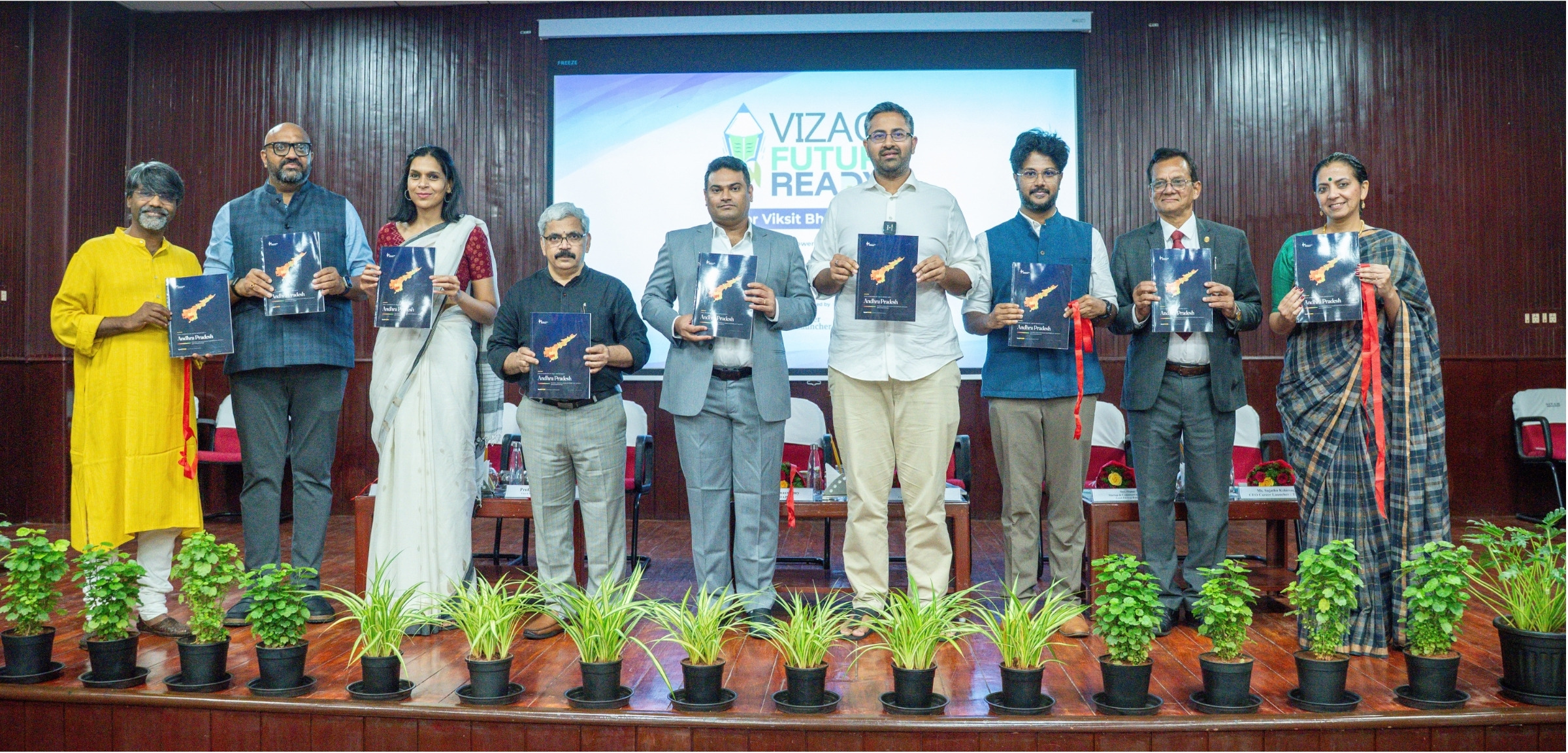 Released in Visakhapatnam on 21 September 2026 at GITAM by M. Sribharat, Member of Parliament from Visakhapatnam and President, GITAM, with Ruchi Gupta, Executive Director, Future of India Foundation; Prof. G.P. Raja Sekhar, Vice-Chancellor, Andhra University; P. Narayana Swamy, CEO, SEEDAP; Raja P Pappu, Dean, GITAM School of Business; Prof. K.V. Ravi Kumar, Dean and Registrar, Centurion University, Vizianagaram; Pranay VK, Startup & Communications Strategy Lead, EkStep Foundation; Satya Narayanan R, Founder and Chairman, CL Educate Limited; and Sujatha Kshirsagar, CEO, Career Launcher / TalEvate.
Andhra Pradesh is a high-capacity state. Its banks lend out more relative to what they hold than any other state including UTs. Its schools are among the best equipped in the country, more of its young people go on to higher education than in most states, and its young women's access to phones and the internet has risen faster than in any other state surveyed. The challenge now is to convert these assets into secure, salaried work, particularly for its graduates and its young women.
Unemployment is 3% among the school educated and 41% among graduates
Unemployment among young people with secondary education or below is 3%, one of the lowest rates of any state. It rises with every step of education after that: 12% at higher secondary and 41% among graduates, which is 15 points higher than the median across India's states. For young women with a degree it is 49% and for young men 37%.
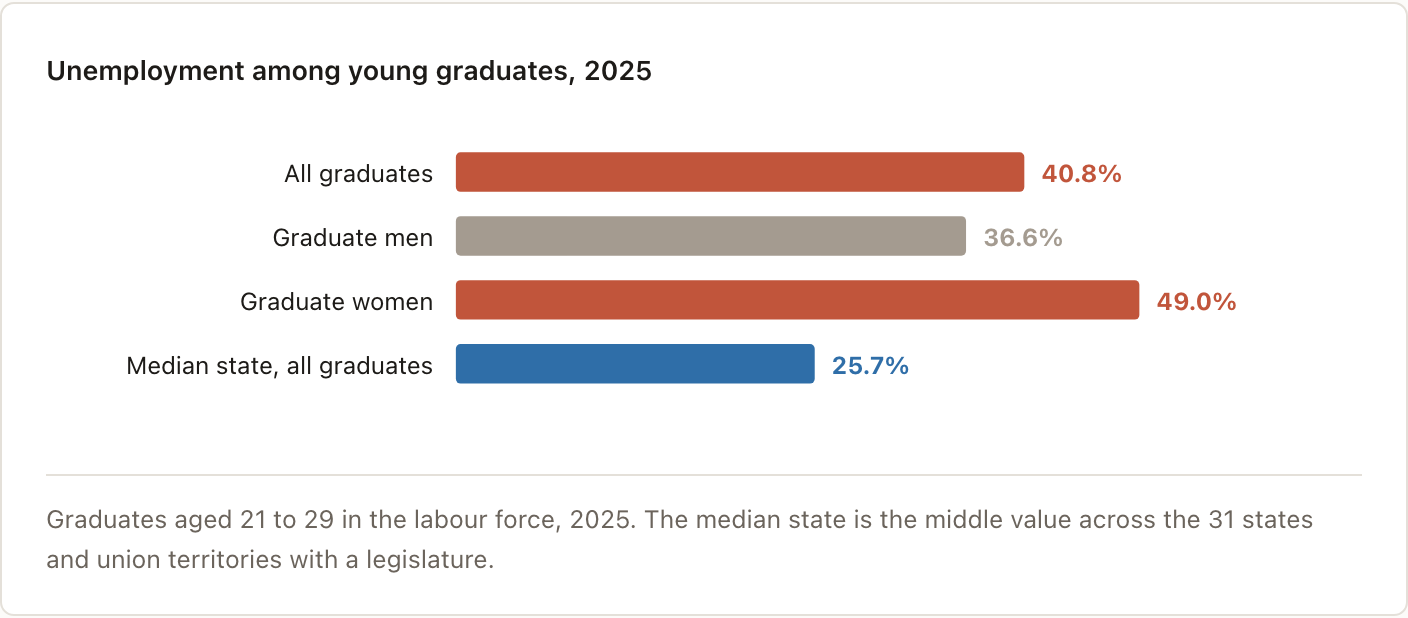
Graduates aged 21 to 29 in the labour force, 2025. The median state is the middle value across the 31 states and union territories with a legislature.
The farm's share of young workers fell from 43% to 32%
Over the eight years since 2017 young people moved out of agriculture and into services, trade and construction. The share of the state's workers in regular salaried jobs rose 5 points to 24%, one of the largest gains in the country, at a time when the median state's share fell slightly. But a large part of the move went into construction, where 78.5% of young workers are casual, and manufacturing's share slipped from 14% to 13% while most states gained. Three in ten of Andhra's workers are casual, against fewer than one in five in the median state. Participation in the labour force fell by more than 2 points to 46%.
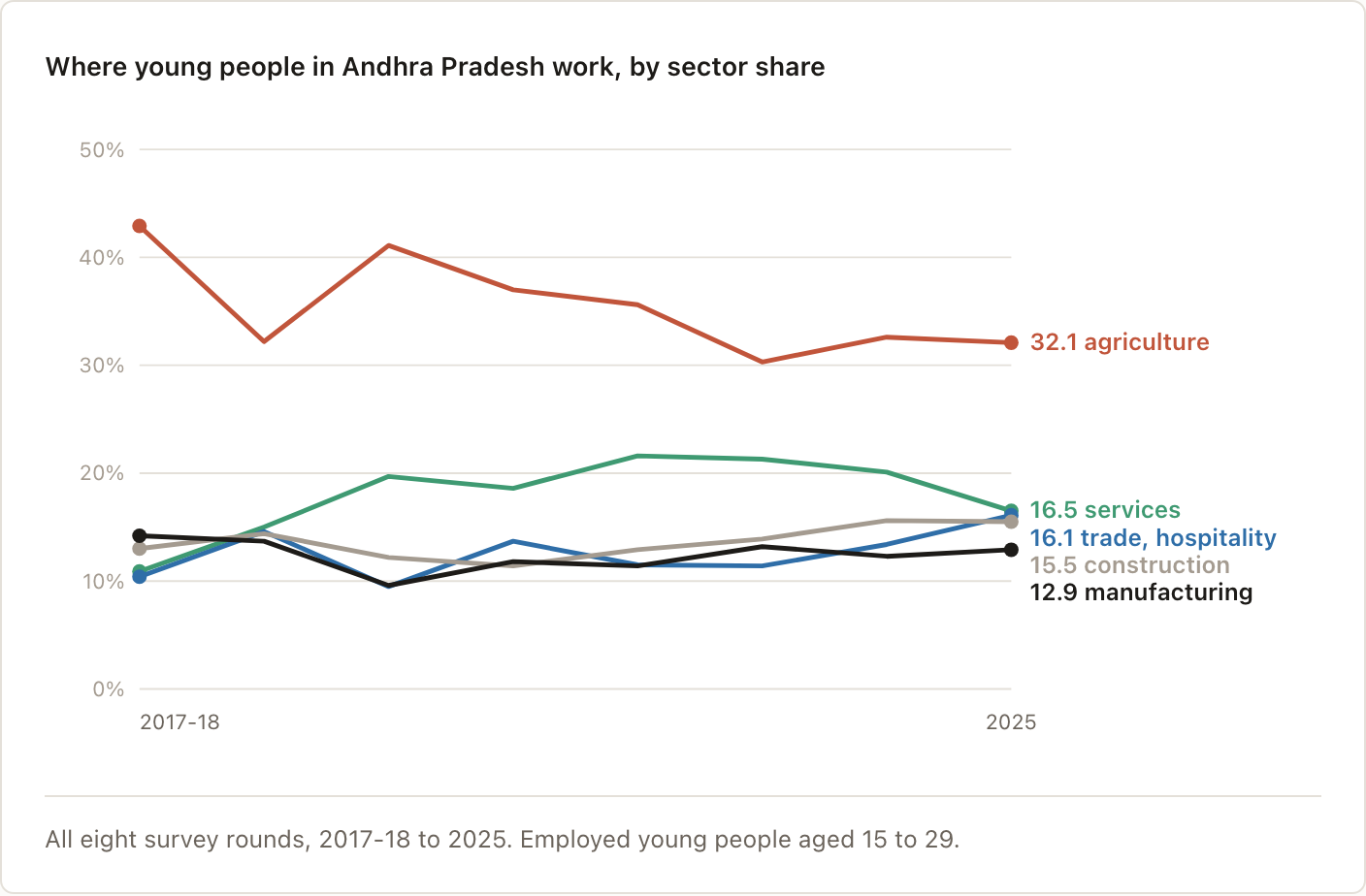
All eight survey rounds, 2017-18 to 2025. Employed young people aged 15 to 29.
For every registered factory there are about 237 small informal enterprises
Andhra Pradesh has 16,011 registered factories employing 7.69 lakh people, and 37.99 lakh unincorporated enterprises, which average 1.4 people each, counting the owner. This is the economy most young people meet. The state lends heavily, but over 70% of that credit is personal loans and lending against agriculture; industry and trade together take 18% of the state's lending, ten points below the median state.
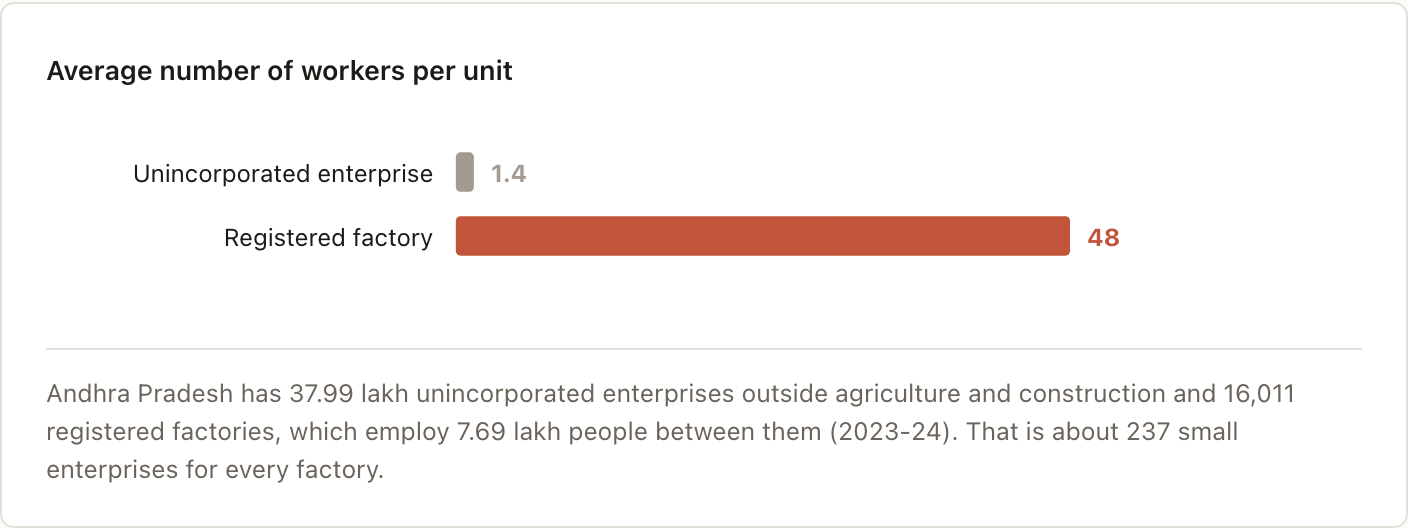
Andhra Pradesh has 37.99 lakh unincorporated enterprises outside agriculture and construction and 16,011 registered factories, which employ 7.69 lakh people between them (2023-24). That is about 237 small enterprises for every factory.
Young women: widening access must lead to work
Between 2021 and 2024 the share of women who have ever used the internet rose from 21% to 64%, and the share who own a mobile phone themselves from 49% to 64%, the largest increases of any state surveyed on both. 92% now have a bank account they use themselves. Over the eight years since 2017-18, the share of young women in the labour force fell from 33% to 30%. 61% of married women take part in all three of the major household decisions, the second lowest of any state surveyed, and women earn 59 paise for every rupee men earn in wage work.
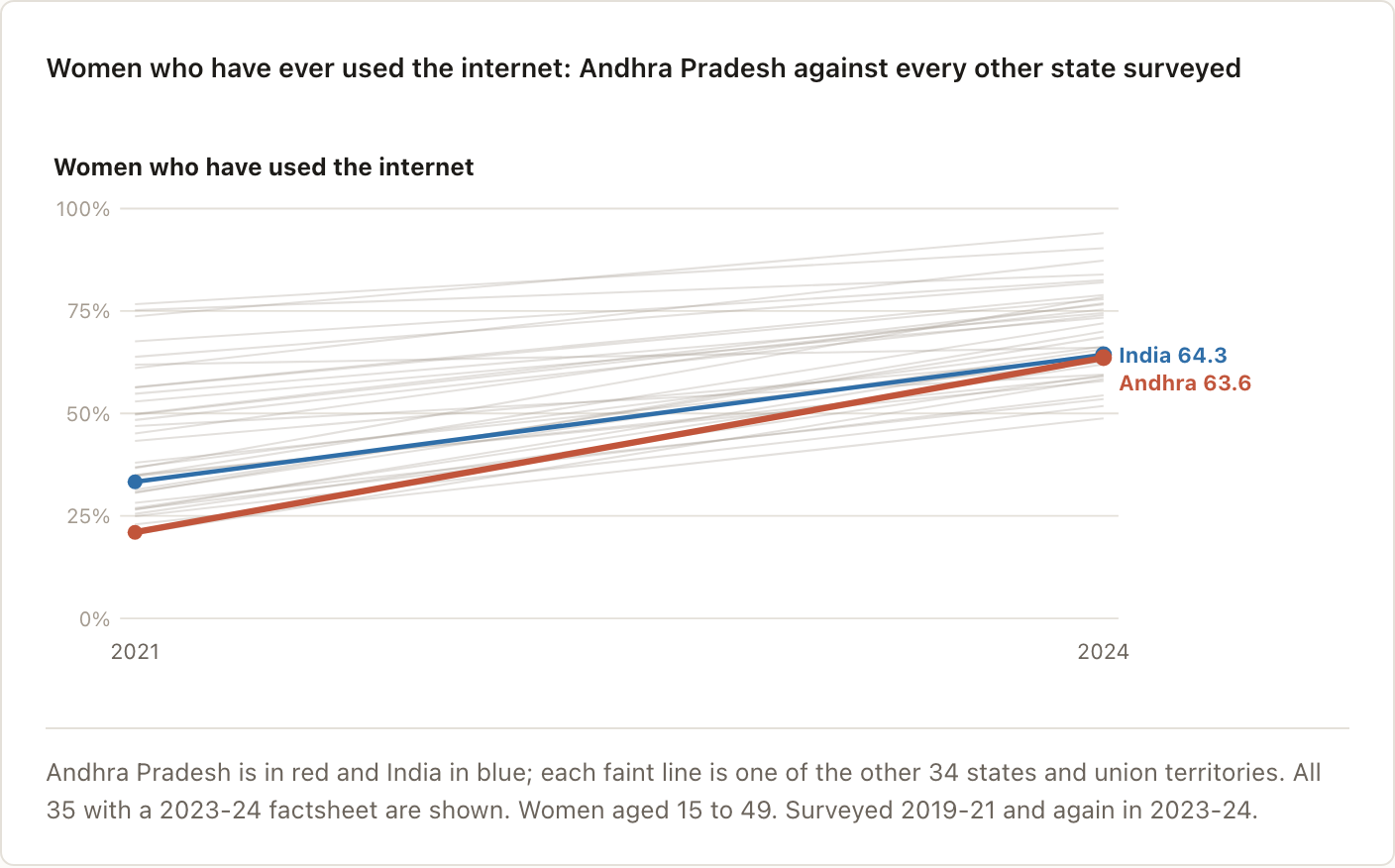
Andhra Pradesh is in red and India in blue; each faint line is one of the other 34 states and union territories. All 35 with a 2023-24 factsheet are shown. Women aged 15 to 49. Surveyed 2019-21 and again in 2023-24.
Nutrition improved against the national trend
The share of women whose weight is below normal fell from 15% to 11% between 2021 and 2024, while the median state's worsened slightly. For men it fell from 16.5% to 13% while the median state's worsened by about two points. Among children under five, stunting fell from 31% to 25%, wasting from 16% to 12% and underweight from 30% to 23%.
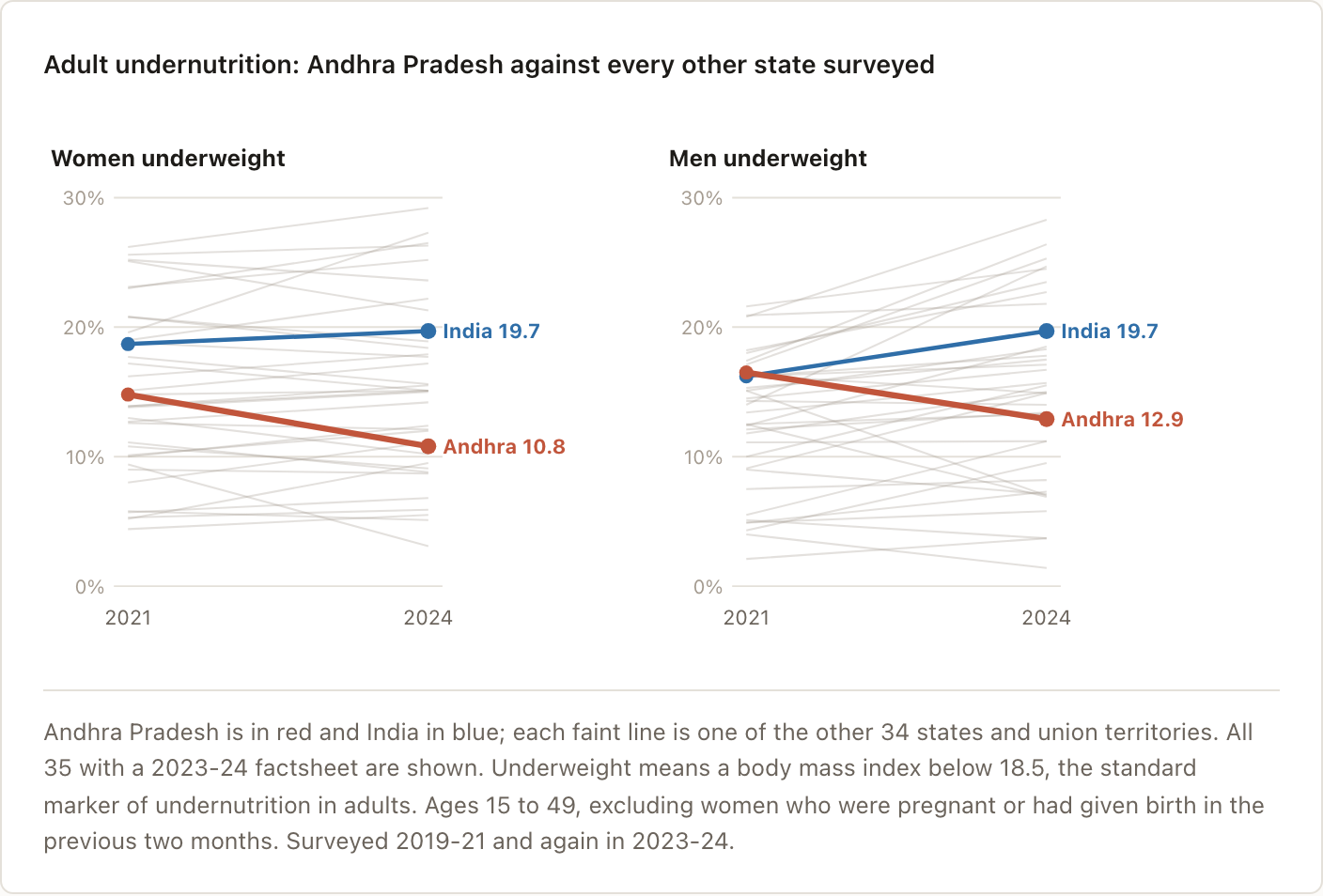
Andhra Pradesh is in red and India in blue; each faint line is one of the other 34 states and union territories. All 35 with a 2023-24 factsheet are shown. Underweight means a body mass index below 18.5, the standard marker of undernutrition in adults. Ages 15 to 49, excluding women who were pregnant or had given birth in the previous two months. Surveyed 2019-21 and again in 2023-24.
Schools are well equipped; learning outcomes are the next challenge
On a composite measure of school facilities Andhra ranks third in the country, with electricity, usable girls' toilets and internet each in about 99% of schools. Learning levels are low: in grade six, 48% of pupils reached the expected standard in language against 56% in the median state, and 41% in mathematics against 44%. One school in five has a single teacher, against 6% in the median state, the highest share in the country. After school most provision is private: 89% of colleges are privately run, and more than half of trainer posts in the state's industrial training institutes are vacant.
District scores run from 54.9 to 41.8
Visakhapatnam, Guntur and Anakapalli lead; Sri Sathya Sai and Annamayya sit at the lower end. Andhra Pradesh's own score is 45.3, against 47.8 for the median state, and the middle district sits at 47.1. Every district has its own scorecard.
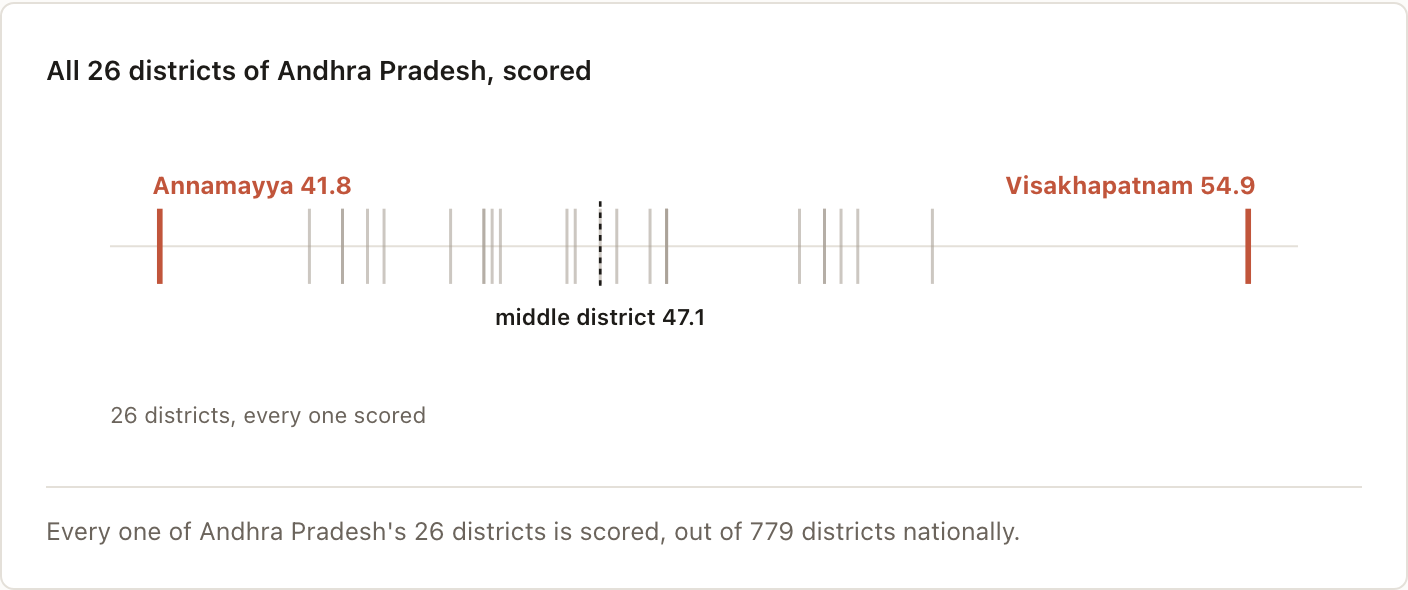
Every one of Andhra Pradesh's 26 districts is scored, out of 779 districts nationally.
What the Handbook asks for
A state employment policy that tracks jobs created, the share that are regular, social security coverage and wage growth. Graduate work close to home, built as the higher-value layer around the state's own assets: processing, cold chain and export around aquaculture, freight and warehousing around the ports, and hospitality around pilgrimage. District Industries Centres that find the firms able to grow and hire, and credit that follows them. More of the state's 4,461 registered apprenticeship establishments active, against about one in four today. Teachers recruited and posted first into single-teacher schools. Training seats filled and instructor posts staffed. Working women's hostels, safe transport and childcare. A dedicated youth review in the district DISHA meeting every year, and the district employment exchange reimagined as a District Youth Resource Centre, a single front door for mentoring, jobs, training, apprenticeships and enterprise support.
Each of Andhra Pradesh's 25 MPs chair their respective district DISHA Committees. Andhra Pradesh's 175 MLAs too are part of the DISHA Committee. They must use their political capital and institutional position to ensure that state policy, and district level action, is geared towards improving youth outcomes first in their own district and the state as a whole.
In the papers
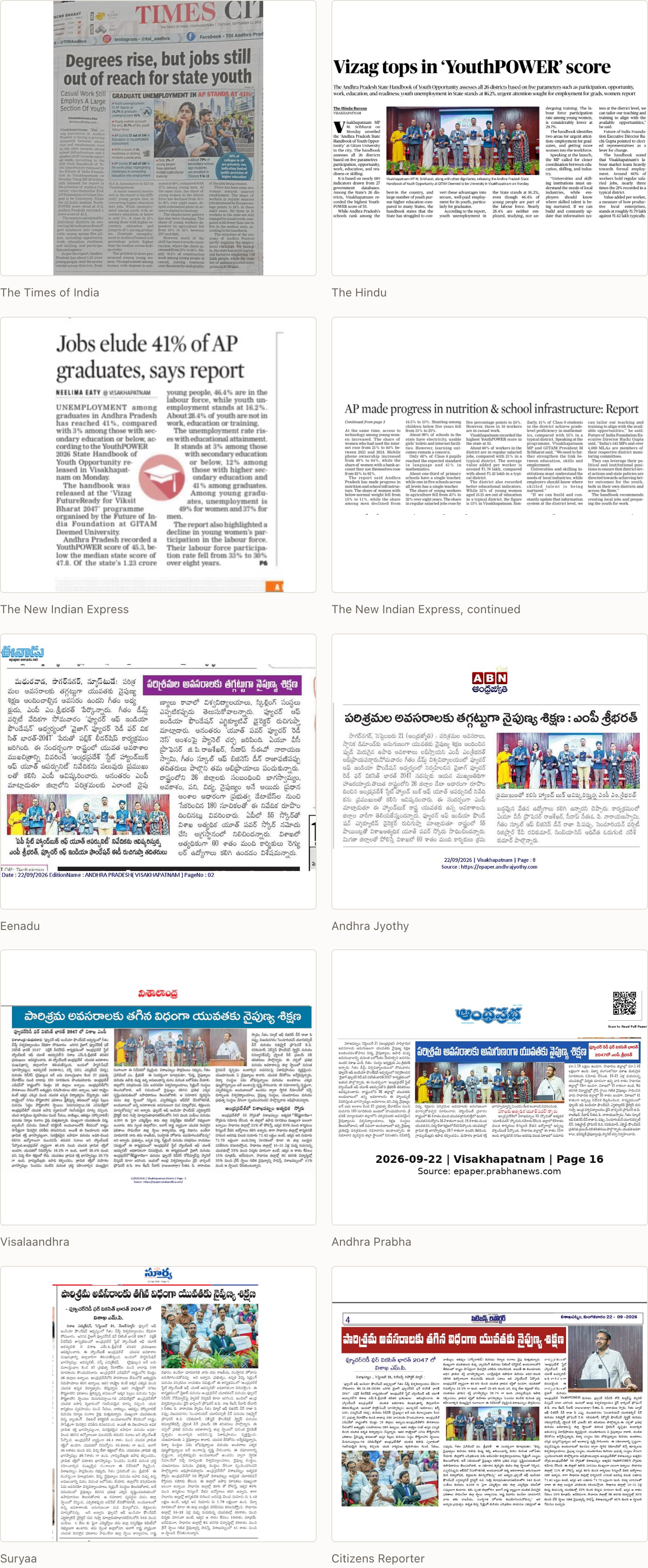
The findings were carried in the following, among others.
The Handbook is at youthpower.in/handbook/andhrapradesh and every district scorecard is at youthpower.in/state/andhra-pradesh.