Rajasthan youth eager to work, but 39% of working youth in unpaid work
Findings from the Rajasthan Handbook of Youth Opportunity, which scores all 41 districts of the state.
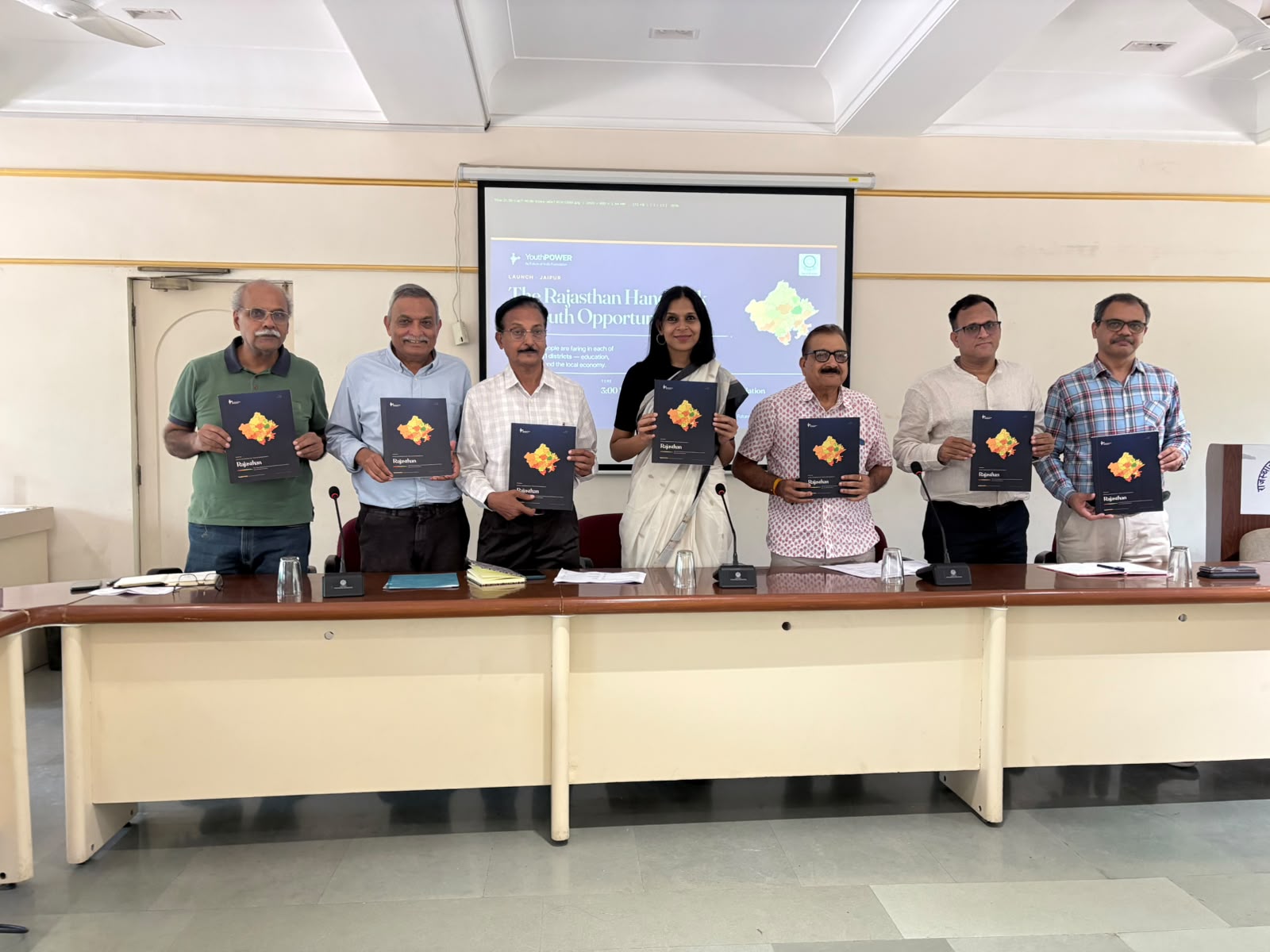 Launched in Jaipur on 8 September 2026 with Seva Mandir. On the panel: Ms. Ruchi Gupta, Executive Director, Future of India Foundation; Prof. Janat Shah, Founding Director, IIM Udaipur; Mr. Ronak Shah, CEO, Seva Mandir; Mr. Hriday Kant Dewan, Setu Initiatives; Mr. Shrinivas Rao, National Lead, Azad Foundation; Mr. Krishnavtar Sharma, Co-founder and Chief Mentor, Aajeevika Bureau; and Mr. Sunny Sebastian, former Vice Chancellor, Haridev Joshi University of Journalism and Mass Communication.
Over the eight years since 2017, young Rajasthanis came forward to work in far greater numbers than before. The state had almost nothing to put them into. The work that grew was farm work, and work that pays nothing at all.
Participation rose 13 points, and young women more than doubled theirs
Participation among 15 to 29 year olds rose from 38% in 2017-18 to 51% in 2025. Among young women it rose from 18% to 39%, and young women account for roughly three quarters of the state's whole increase. The share in neither work, education nor training fell from 31% to 21%.
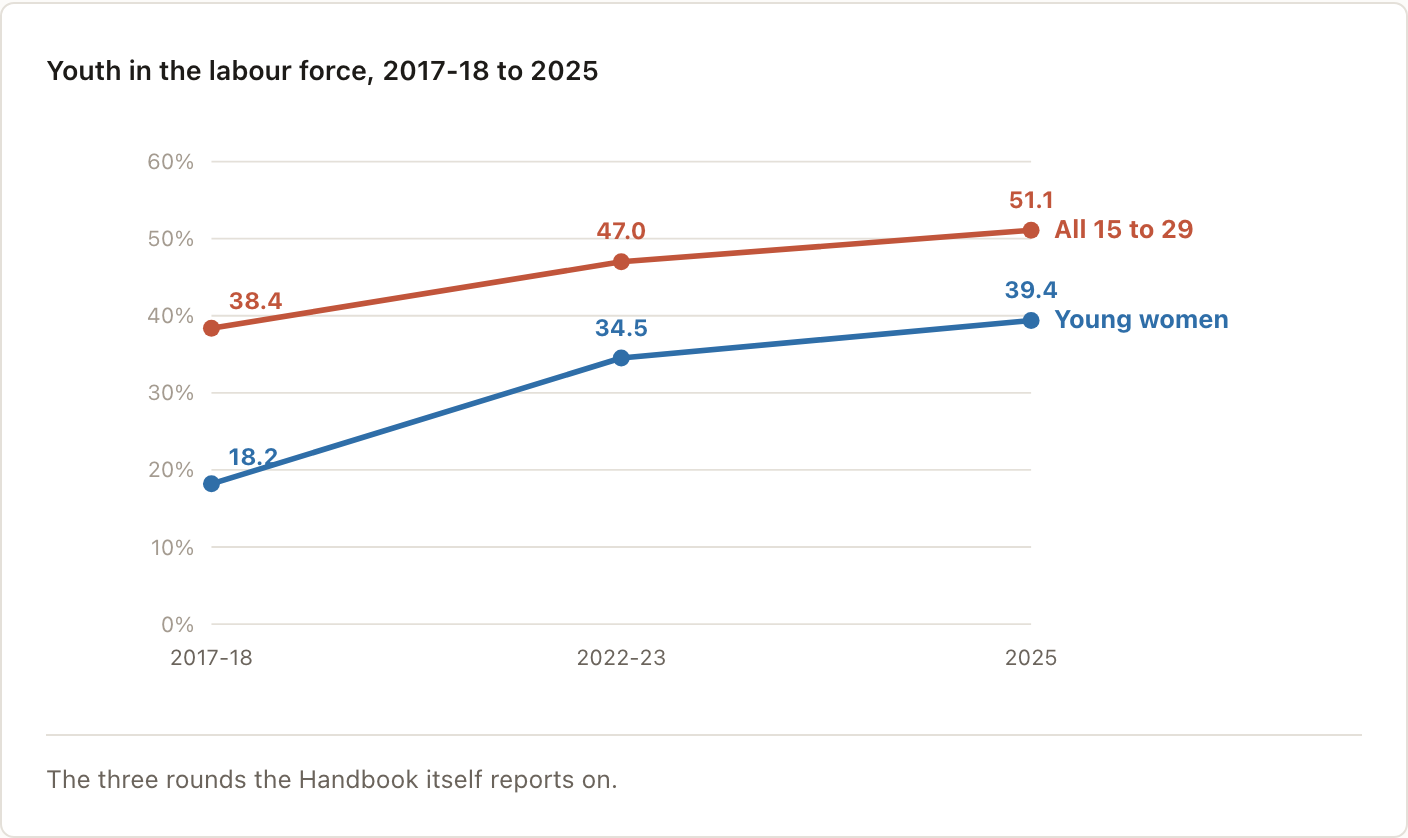
The three rounds the Handbook itself reports on.
Nearly nine in ten of Rajasthan's unincorporated enterprises have at most two workers
The enterprises exist. Rajasthan has more than 30 lakh registered enterprises and 99% of them are micro. Banks lend at one of the highest credit to deposit ratios in the country. Separately, it has 41.45 lakh unincorporated enterprises outside agriculture and construction, and they average fewer than two people each, counting the owner. Factory employment grew by more than a third over these years and still accounts for 2% of all employment in the state. Salaried work in services sits in government, education and health rather than in the enterprise base.
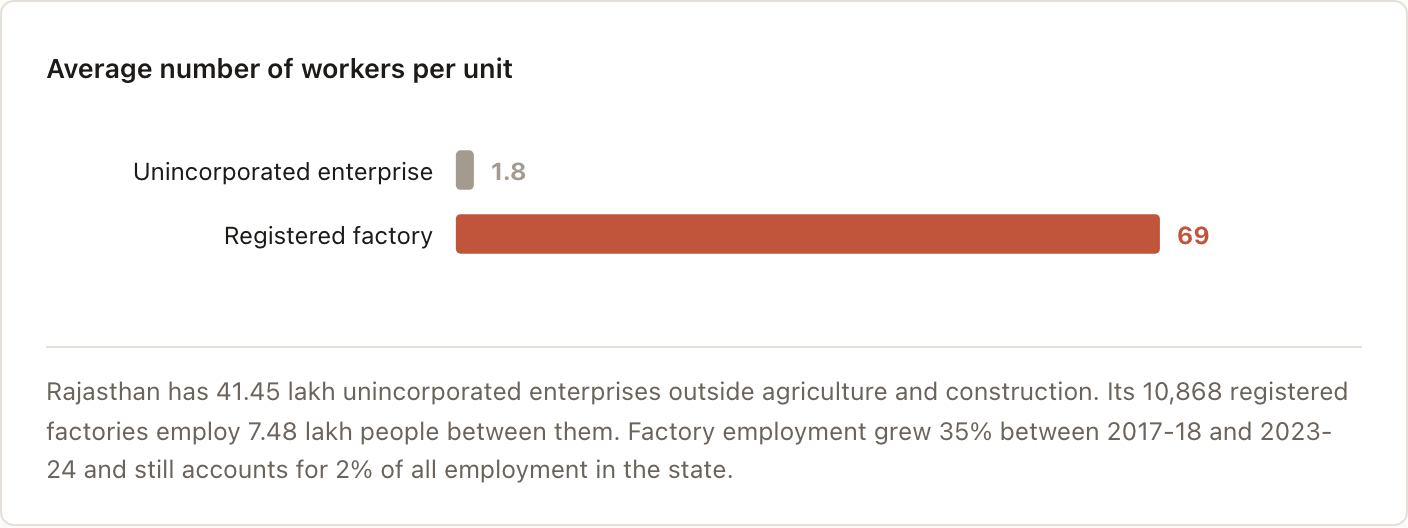
Rajasthan has 41.45 lakh unincorporated enterprises outside agriculture and construction. Its 10,868 registered factories employ 7.48 lakh people between them. Factory employment grew 35% between 2017-18 and 2023-24 and still accounts for 2% of all employment in the state.
So the extra workers went to the farm
Agriculture's share of young workers rose from 39% to 47%, the largest increase of any major state, at a time when the typical state was moving out of farming. Construction, which absorbs unskilled labour at scale almost everywhere else, fell from 17% to 14%. Manufacturing barely moved. Across workers of all ages the composition shifted: among working men agriculture fell from 40% to 36% while their real earnings rose, while among working women roughly four in five are in agriculture and women's share of everyone employed rose from 27% to 41%.
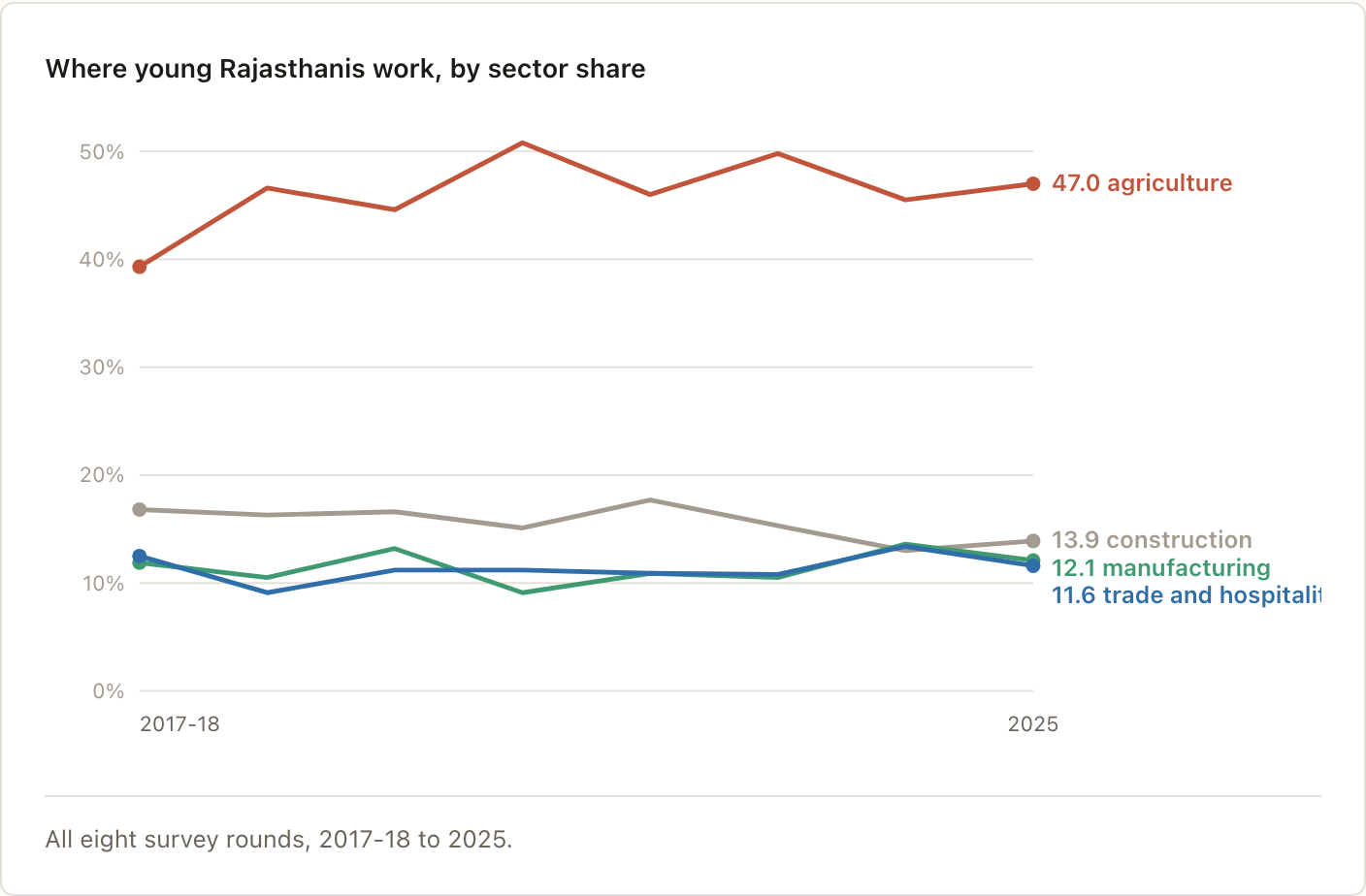
All eight survey rounds, 2017-18 to 2025.
39 of every 100 young workers earn no wage of their own
Among young women it is 61. More than half the growth in employment over the eight years was unpaid. The share of young workers holding a regular salaried job fell from 25% to 23%. Across workers aged 15 to 59, social security reaches 7% against 15% in the typical state, and 0.06% among casual and self-employed workers.
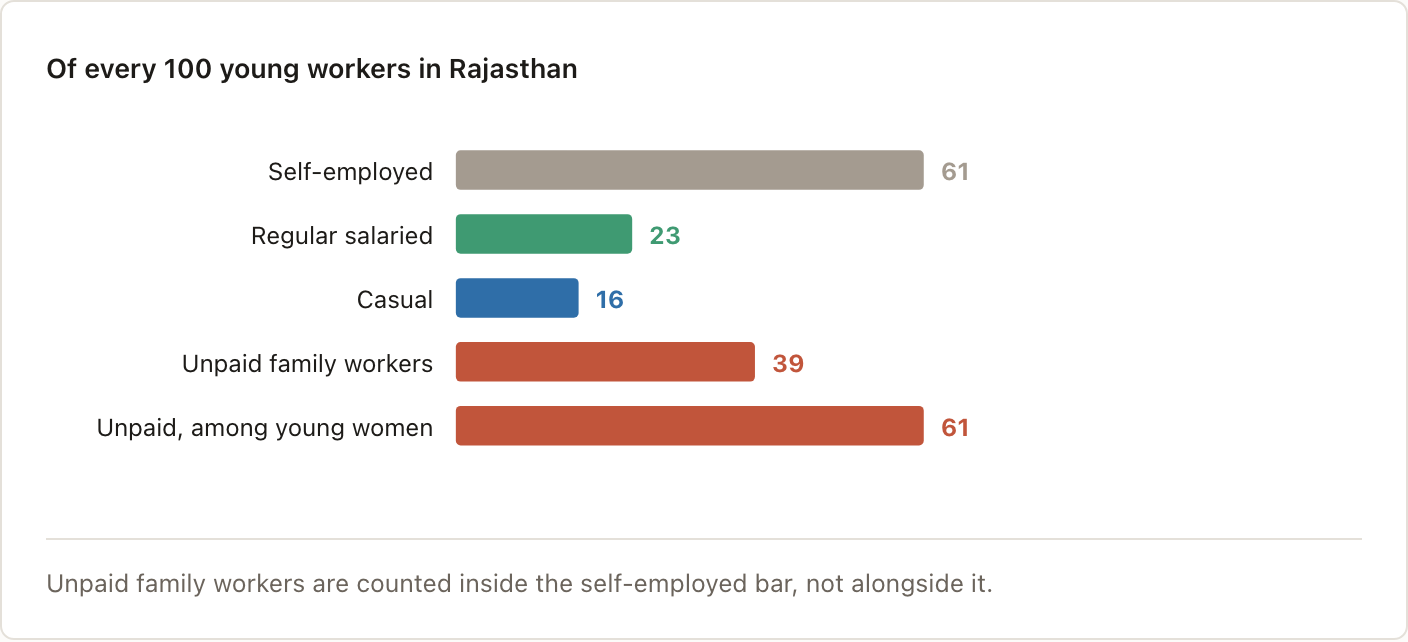
Unpaid family workers are counted inside the self-employed bar, not alongside it.
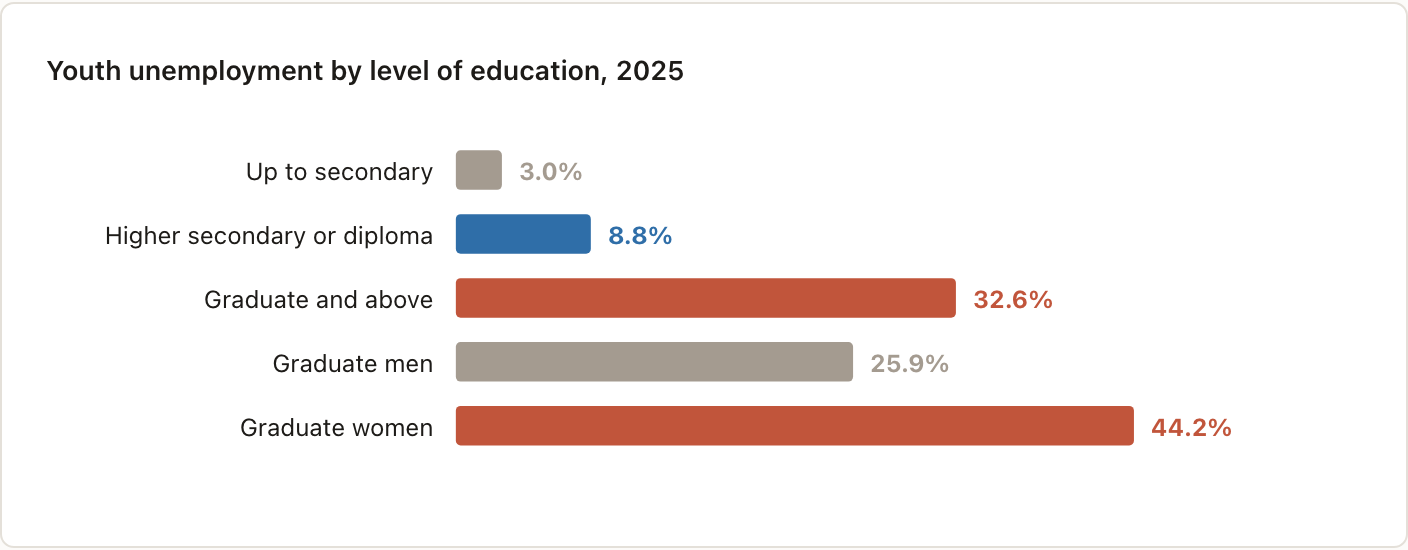
Unemployment is 33% among graduates and 3% among those educated up to secondary
Unemployment reaches 44% among young women graduates against 26% among young men, and more than half of the graduate women who do work are unpaid family labour on land the household already farms. Rajasthan's schools rank third in India on class nine mathematics and fifth on science. Its industrial training institutes certify 52% of the students they train against 67% in the typical state, the lowest rate in the country.
Adult undernutrition is rising faster than in any state surveyed
Between 2021 and 2024 the share of undernourished women aged 15 to 49 rose from 20% to 27%, and of undernourished men from 14% to 25%. Across India the same shares rose by 1 point and 3.5 points. Rajasthan has the steepest rise of any state surveyed on both. Children moved the same way: among the under-fives, wasting rose 3 points and underweight almost 6, while the all-India figures fell. This window is shorter than the labour series above and ends a year earlier.
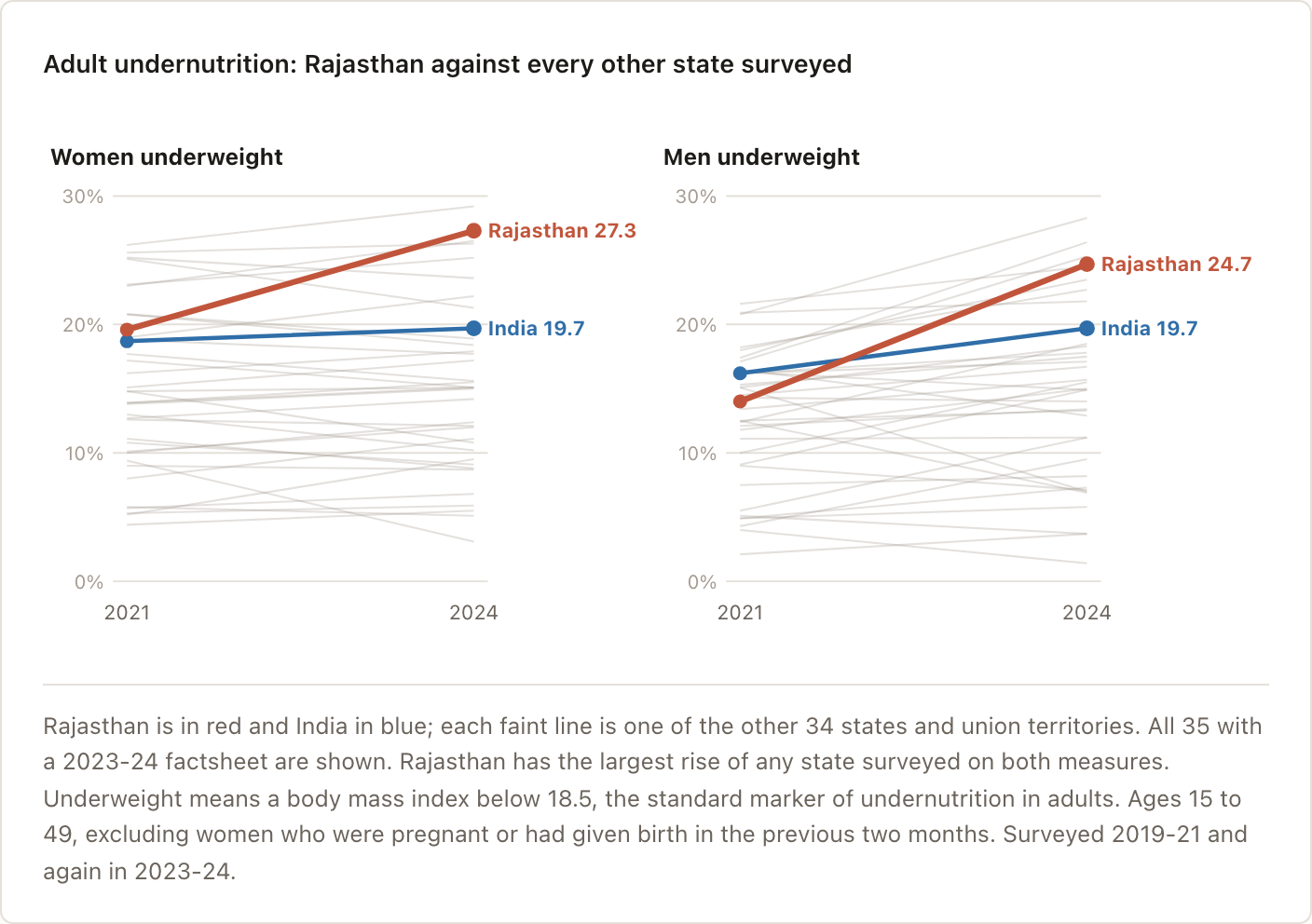
Rajasthan is in red and India in blue; each faint line is one of the other 34 states and union territories. All 35 with a 2023-24 factsheet are shown. Rajasthan has the largest rise of any state surveyed on both measures. Underweight means a body mass index below 18.5, the standard marker of undernutrition in adults. Ages 15 to 49, excluding women who were pregnant or had given birth in the previous two months. Surveyed 2019-21 and again in 2023-24.
Women's say in the household fell while India's rose
Of every 100 young women who work, 61 are unpaid family labour. The share of married women aged 15 to 49 taking part in household decisions fell from 88% to 85% in Rajasthan, the third largest fall of 35 states and union territories, while India edged up from 89% to 89%. On the stricter measure, a say in all three of the major decisions, Rajasthan stood at 66% against India's 71% in 2019-21, the later round does not carry it. Their access moved faster than their say: women's internet use rose 29 points and their phone ownership 11.
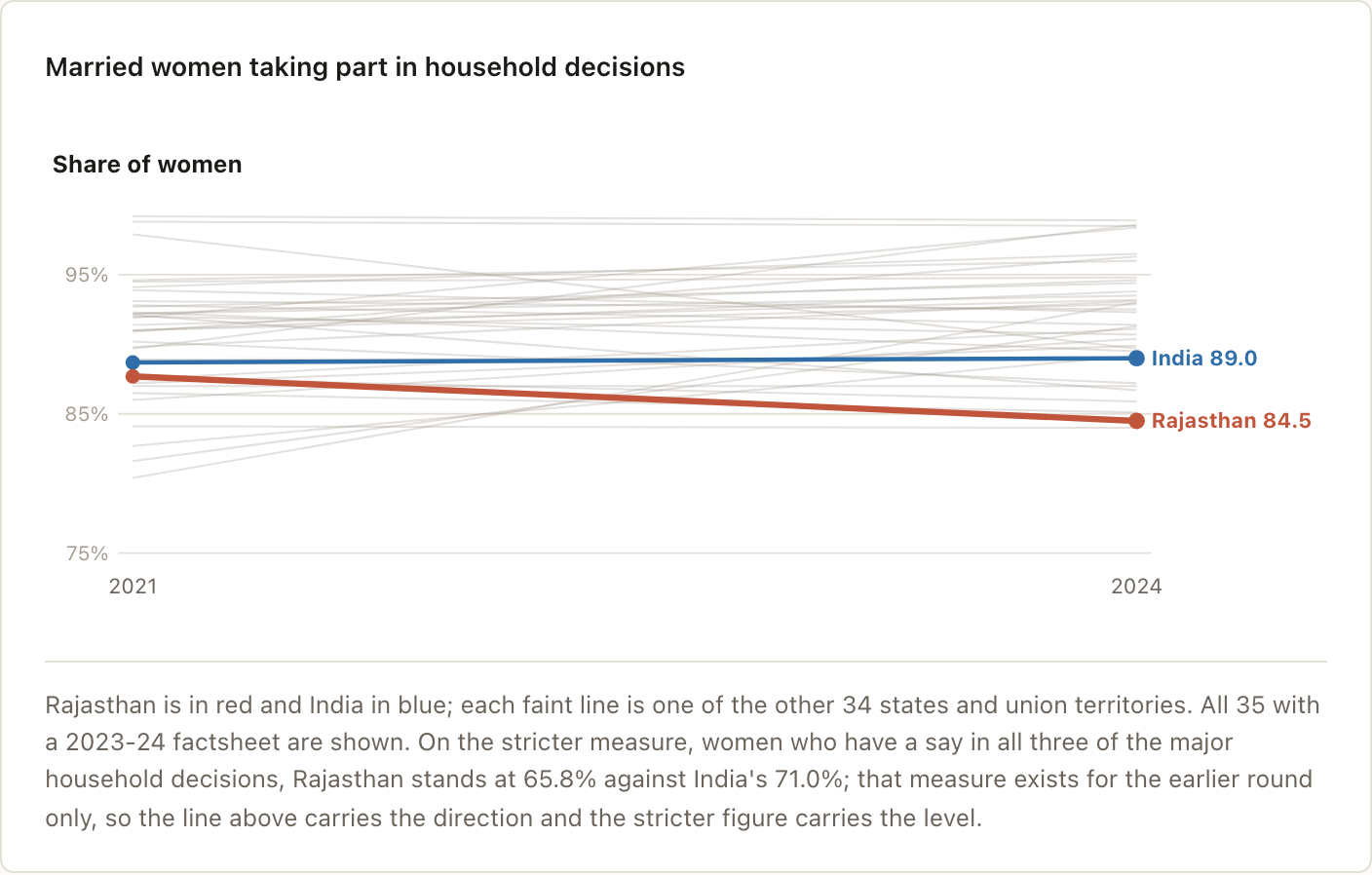
Rajasthan is in red and India in blue; each faint line is one of the other 34 states and union territories. All 35 with a 2023-24 factsheet are shown. On the stricter measure, women who have a say in all three of the major household decisions, Rajasthan stands at 65.8% against India's 71.0%; that measure exists for the earlier round only, so the line above carries the direction and the stricter figure carries the level.
District scores run from 55.9 to 41.6
Jaipur, Jhunjhunu and Udaipur lead; Baran, Pratapgarh and Dungarpur sit at the lower end. Rajasthan's own score is 45.7, and the median district sits at 46.8. Every district has its own scorecard.
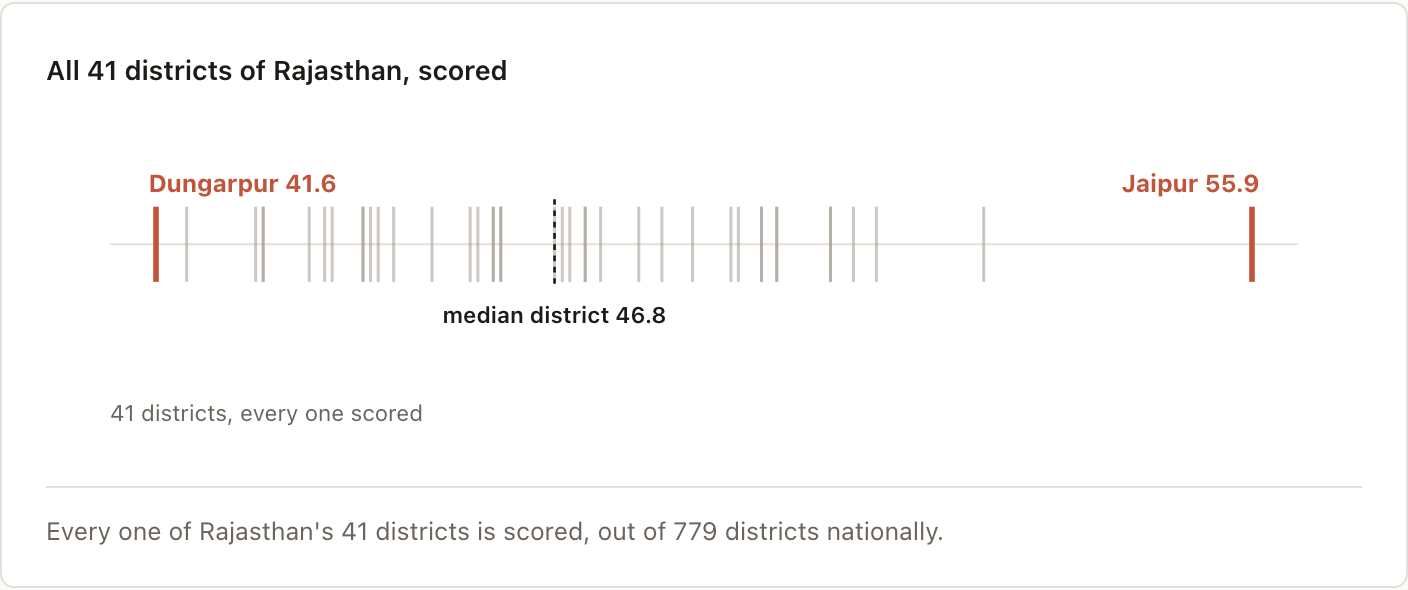
Every one of Rajasthan's 41 districts is scored, out of 779 districts nationally.
What the Handbook asks for
A state employment policy that tracks job creation, regular employment, social security coverage and wage growth. Help for small enterprises to grow to the point where they employ someone other than the owner. Better earnings and conditions in the occupations young people already work in. Skilling aligned to local demand, with the certification gap closed. Apprenticeships and paid opportunities for young women. Nutrition as a standing item in the district youth review. And the existing employment exchanges reimagined as District Youth Resource Centres, a single point of access for mentoring, jobs, training, apprenticeships and enterprise support.
Each of Rajasthan's 25 MPs chair their respective district DISHA Committees. Rajasthan's 200 MLAs too are part of the DISHA Committee. They must use their political capital and institutional position to ensure that state policy, and district level action, is geared towards improving youth outcomes first in their own district and the state as a whole.
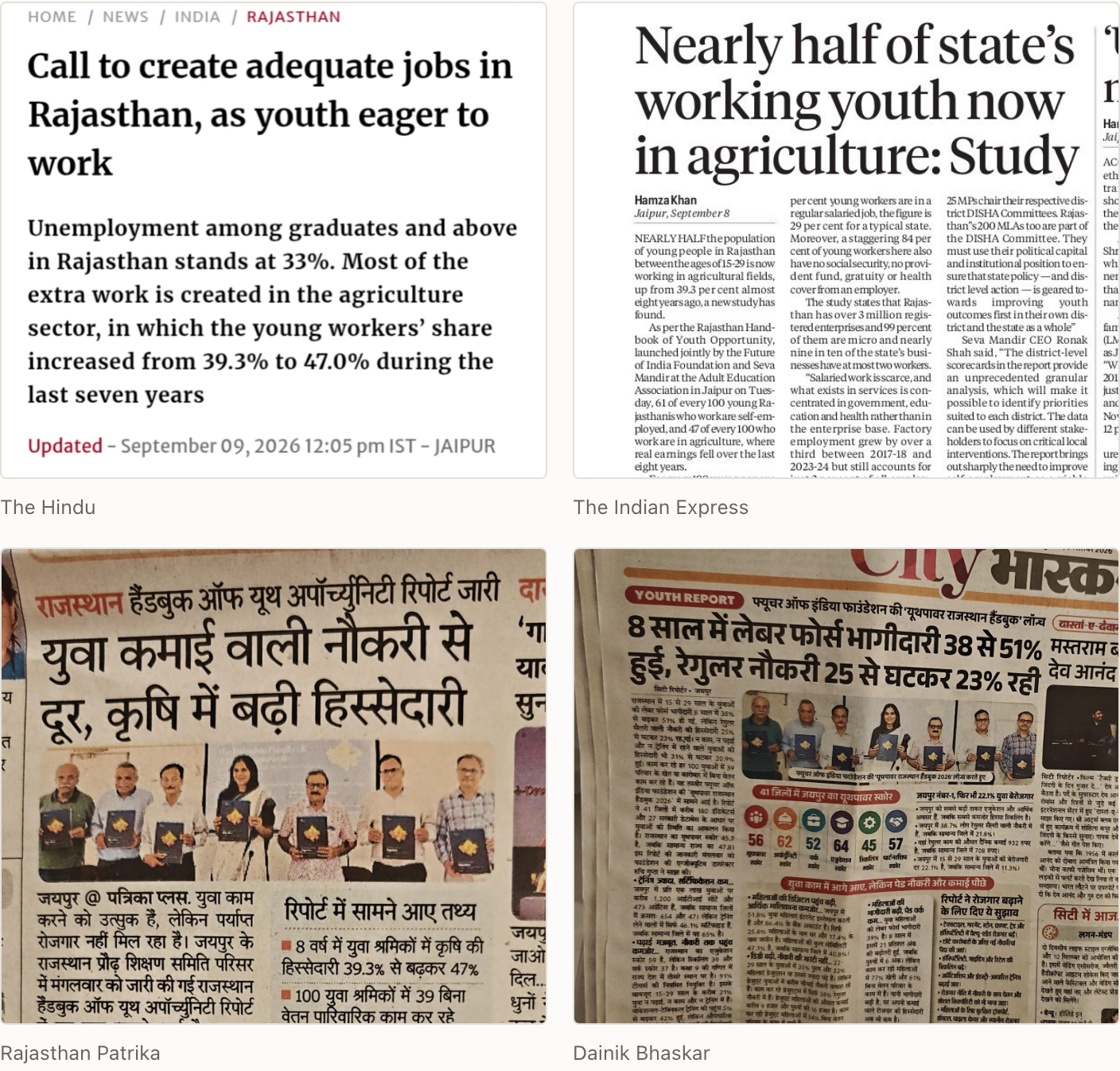
In the papers
The findings were carried in the following, among others.
The Handbook is at youthpower.in/handbook/rajasthan and every district scorecard is at youthpower.in/state/rajasthan.