The fraying promise of post-liberalisation India
We made good jobs synonymous with college degrees, but degrees are delivering neither jobs nor better pay.
Topics: Graduates · Unemployment · Jobs · Economy
The promise was a better life than your parents had
Post-liberalisation India carried an implicit promise: a growing economy would offer better work than the last generation had, and children would lead better lives than their parents.
That promise needed a route, and that route has narrowed. This piece traces the route India built, and what has happened to it.
That route went through services
Growth went to services. Farming shrank. Factories stayed small.
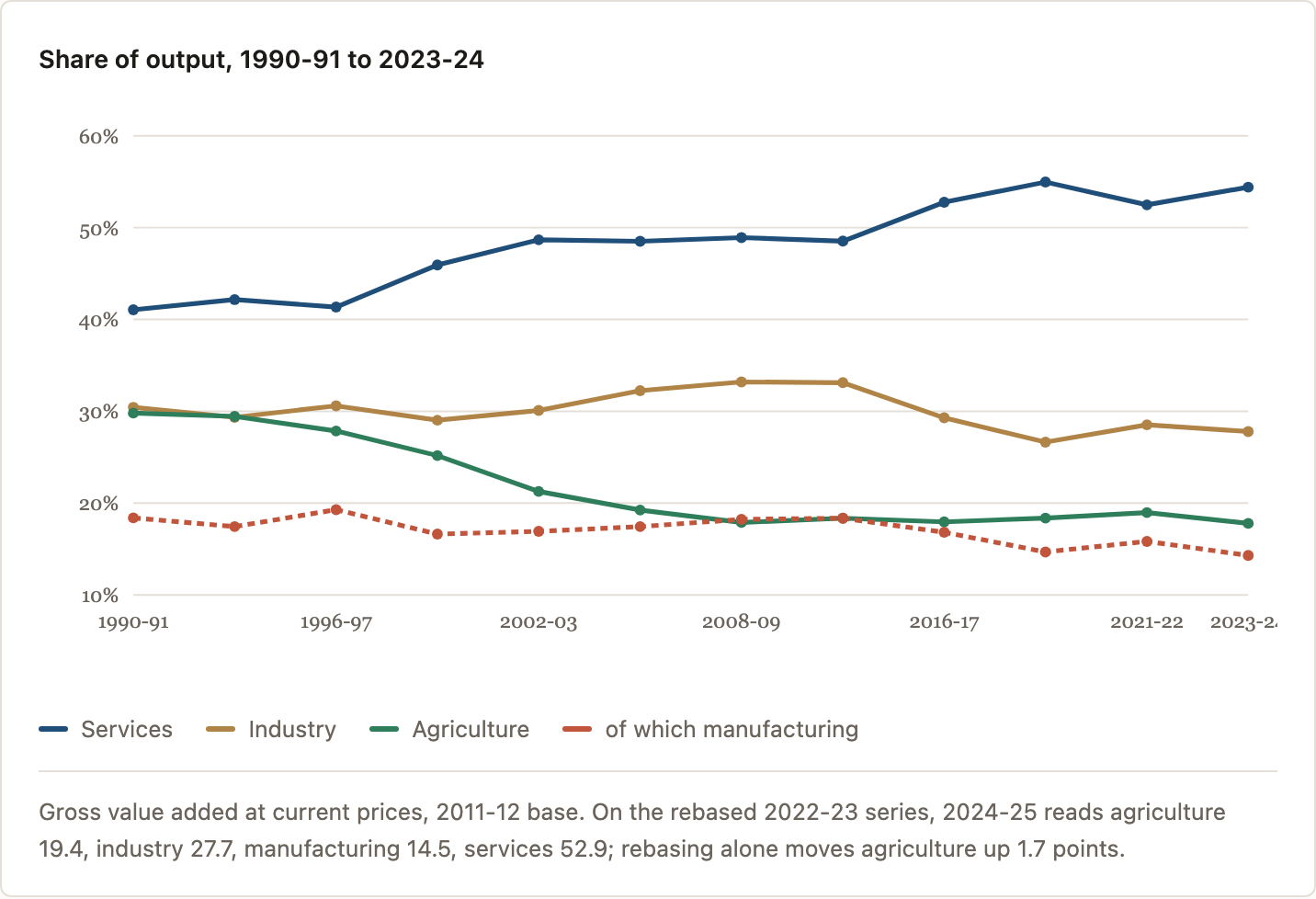
Since 1991, services have gone from 41% to 54% of the economy. Farming has fallen by two fifths, from 30% to 18%. Manufacturing was flat for twenty years and then fell to 14%, below where it started.
A salaried job in services pays about twice farm work, and more with education.
A worker in services produces almost four times what a worker on a farm produces. A quarter of the people who work on farms are not paid at all. Counting them, the middle farm worker with schooling to secondary level earns about ₹5,100 a month, against ₹12,000 for someone with the same schooling in a salaried service job. The gap widens with education.
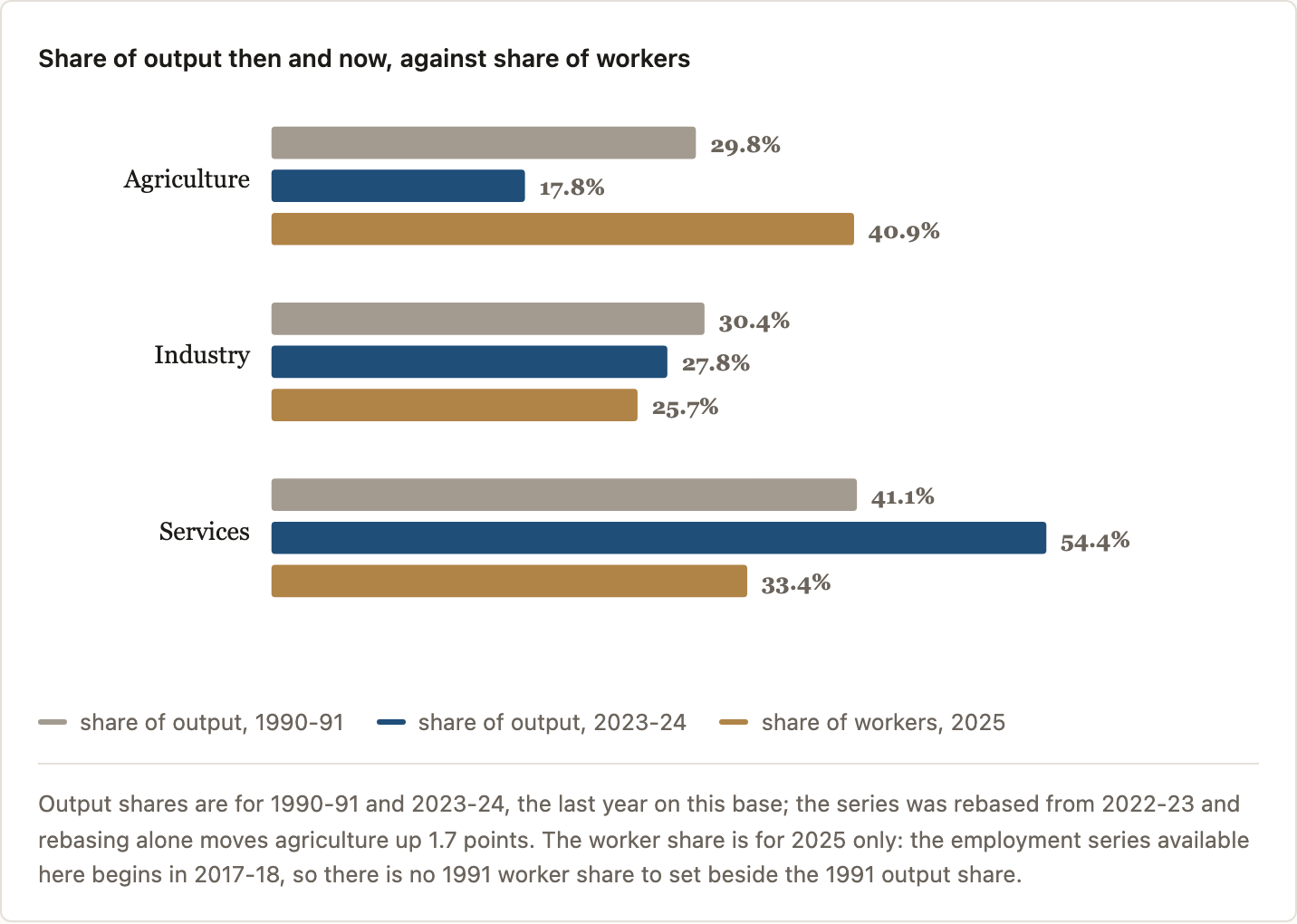
However, services absorbed few workers, and farming still employs more than services.
Two in five workers are still on farms, which produce under a fifth of the economy. Services produce more than half of it with a third of the workers.
The best-paid jobs went to graduates.
Graduates are a third of India's regular salaried employees, and 84% of the best-paid tenth of them.
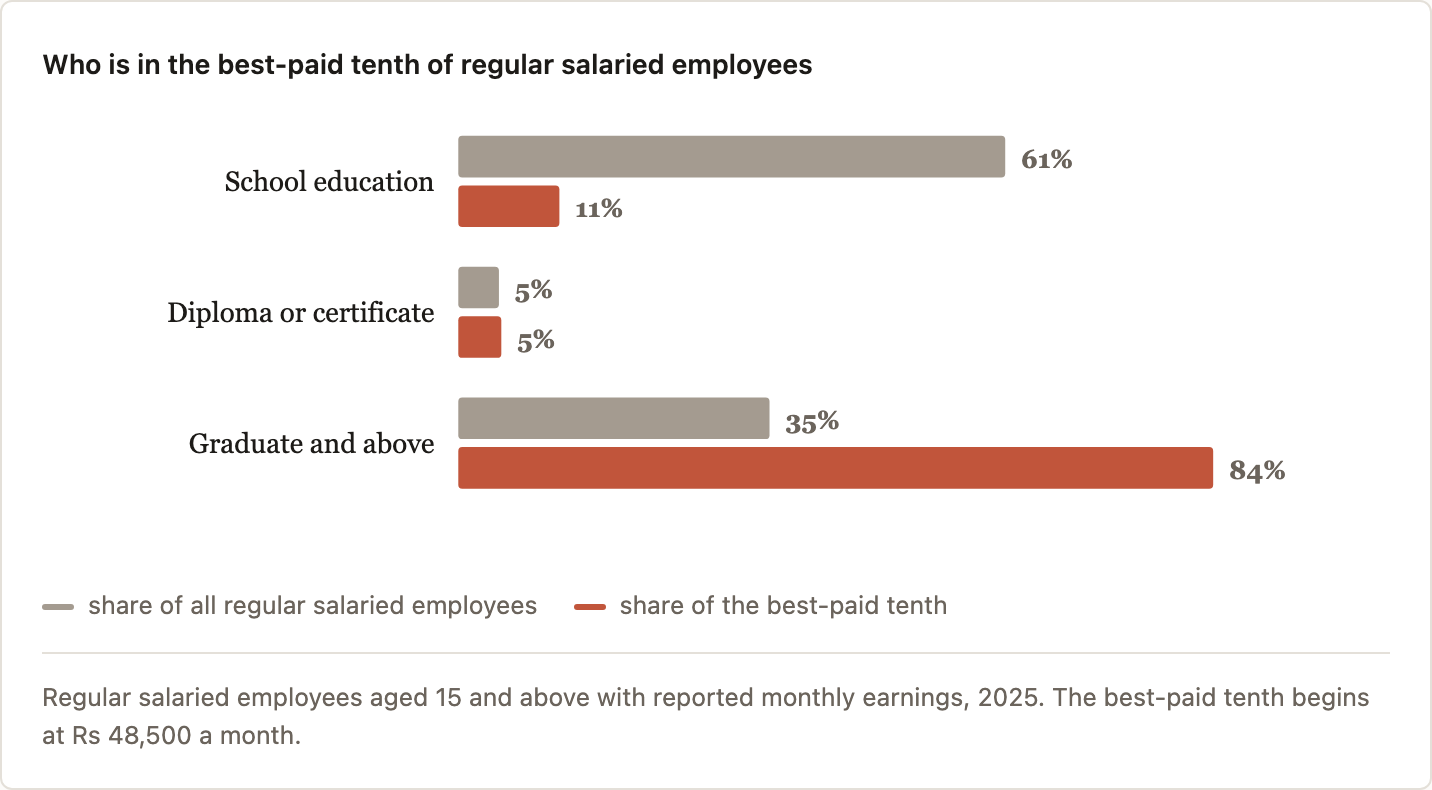
One in four graduates in salaried work is in that tenth. With only school education it is one in fifty, so a graduate is thirteen times more likely to get there.
Inside services, where the growth was, the pattern is sharper. Graduates are 42% of regular salaried employees in services and 87% of the best-paid tenth of them.
For millions of families the route to a better life narrowed to one path: get a degree, then get a salaried job. They organised their savings and their children's childhoods around it.
That route has narrowed
Enrolment went from 6% to 30%. Graduate jobs went from 3% to 9%.
In the early 1990s, 6% of young Indians were in higher education. As per the latest available figures, for 2023-24, it is 30%. India had 20 million people with degrees then and has 127 million now.
Families paid for most of it themselves. Seven in ten colleges are private and unaided, and more than four in five are privately run.
Over the same thirty years, graduates with a salaried job went from 3% of all workers to 9%.
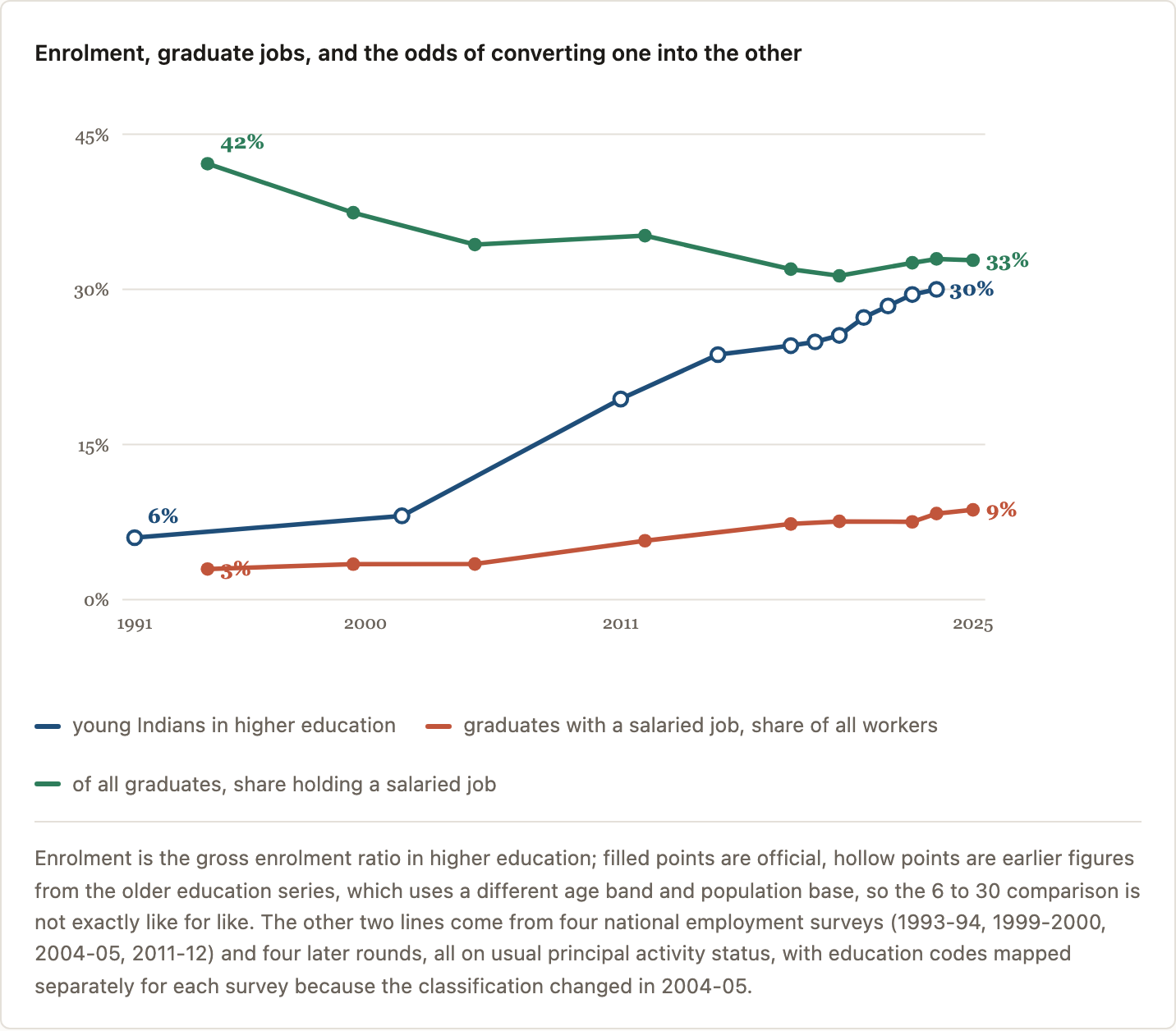
The clearest measure is the third line. In 1993-94, 42% of graduates held a salaried job. Today 33% do, and self-employment made up only part of the difference. Among graduates who work, the salaried share fell from 65% to 57%.
Some of that is who graduates are now. Women were three in ten graduates in 1993-94 and are more than four in ten today, and far fewer of them hold salaried work.
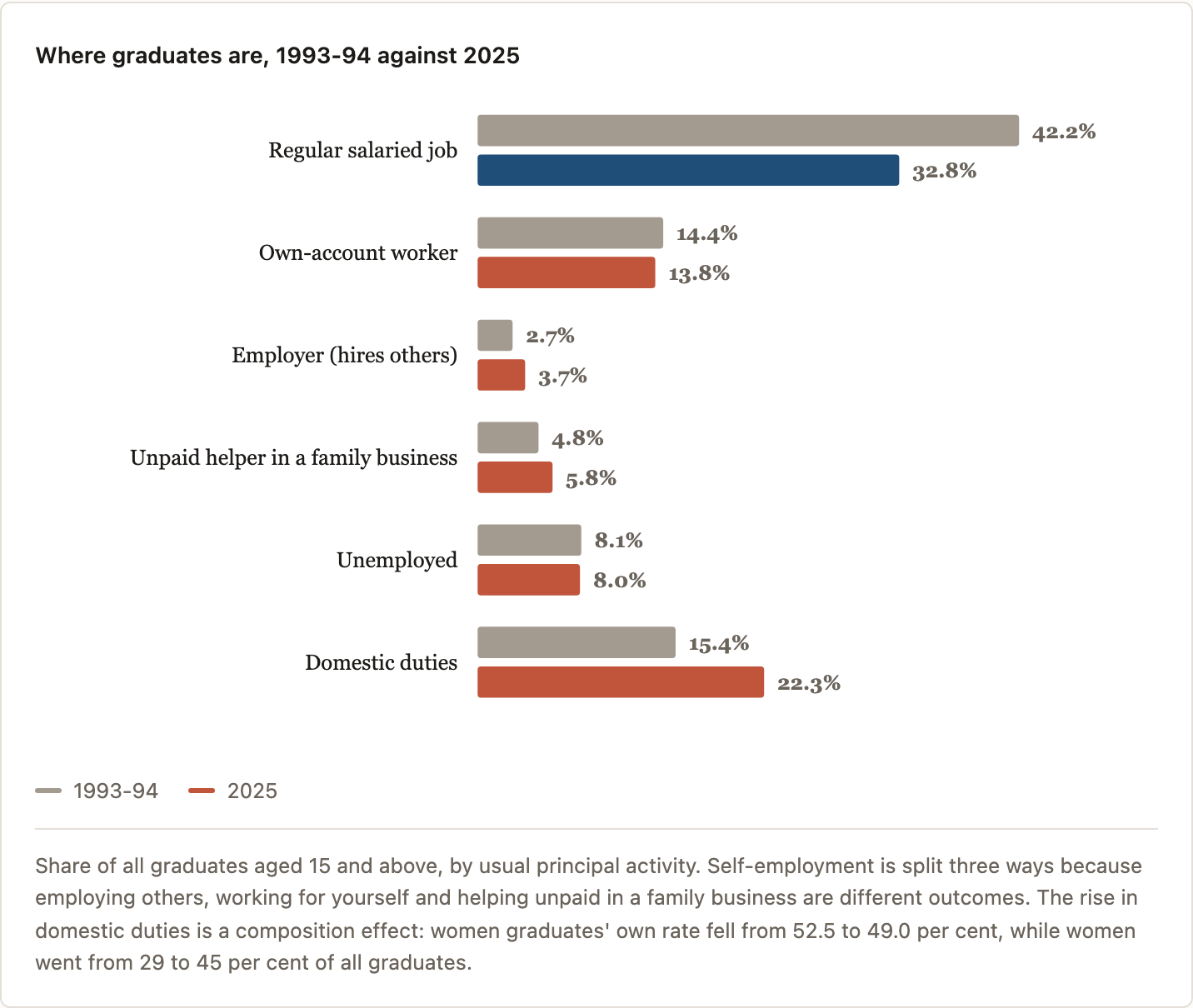
Graduates multiplied faster than government jobs.
Two in five graduates with a salaried job worked for the government or a public body in 2017-18. It is now one in three. The number of those jobs held up; everything around them grew faster.
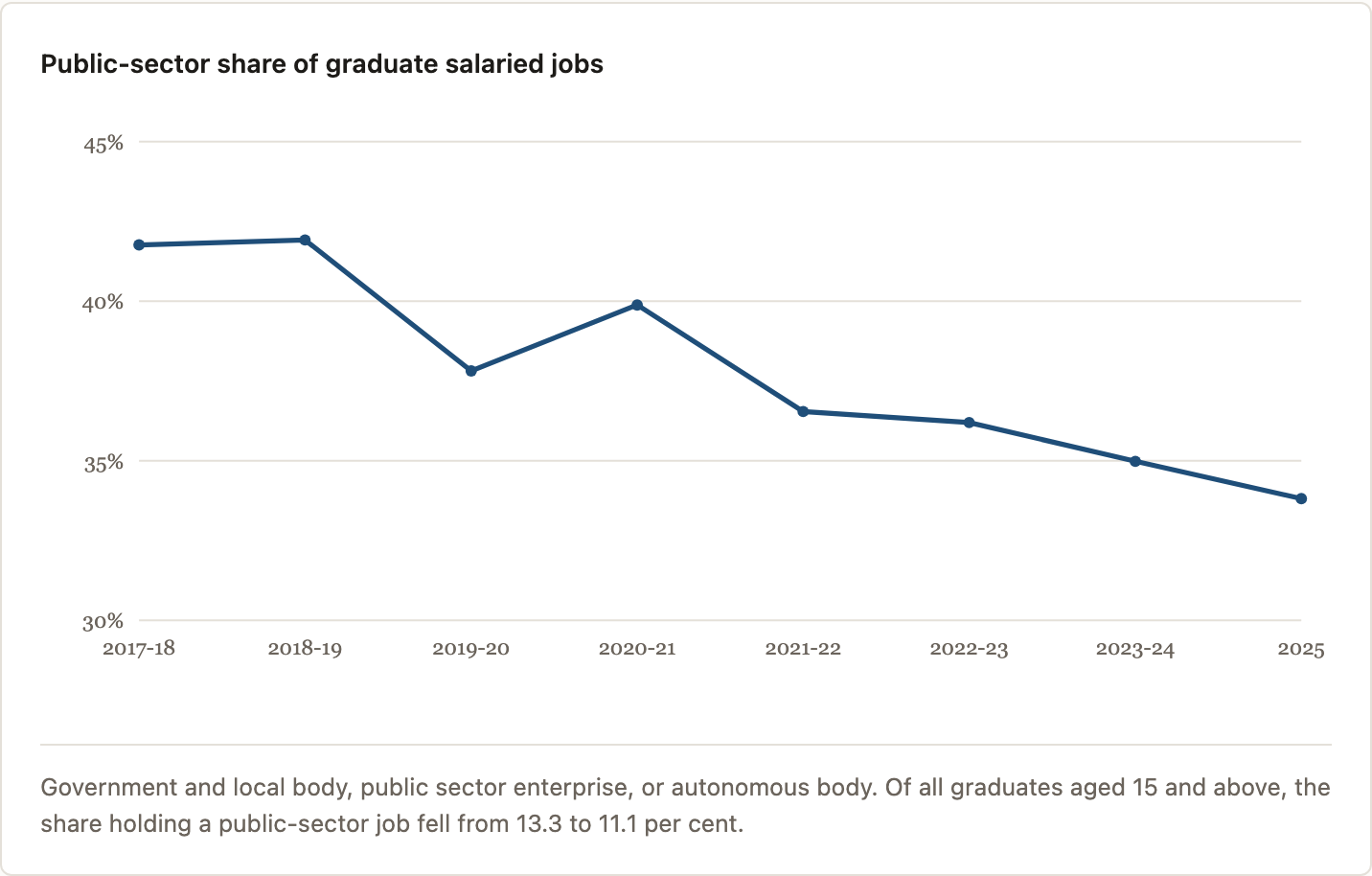
This is what the recruitment exams and the coaching towns are built around.
The returns to the route have stalled
Pay is where it was eight years ago.
A graduate in a salaried job earned ₹25,100 a month in 2017-18 and ₹36,773 in 2025. Prices rose by as much.
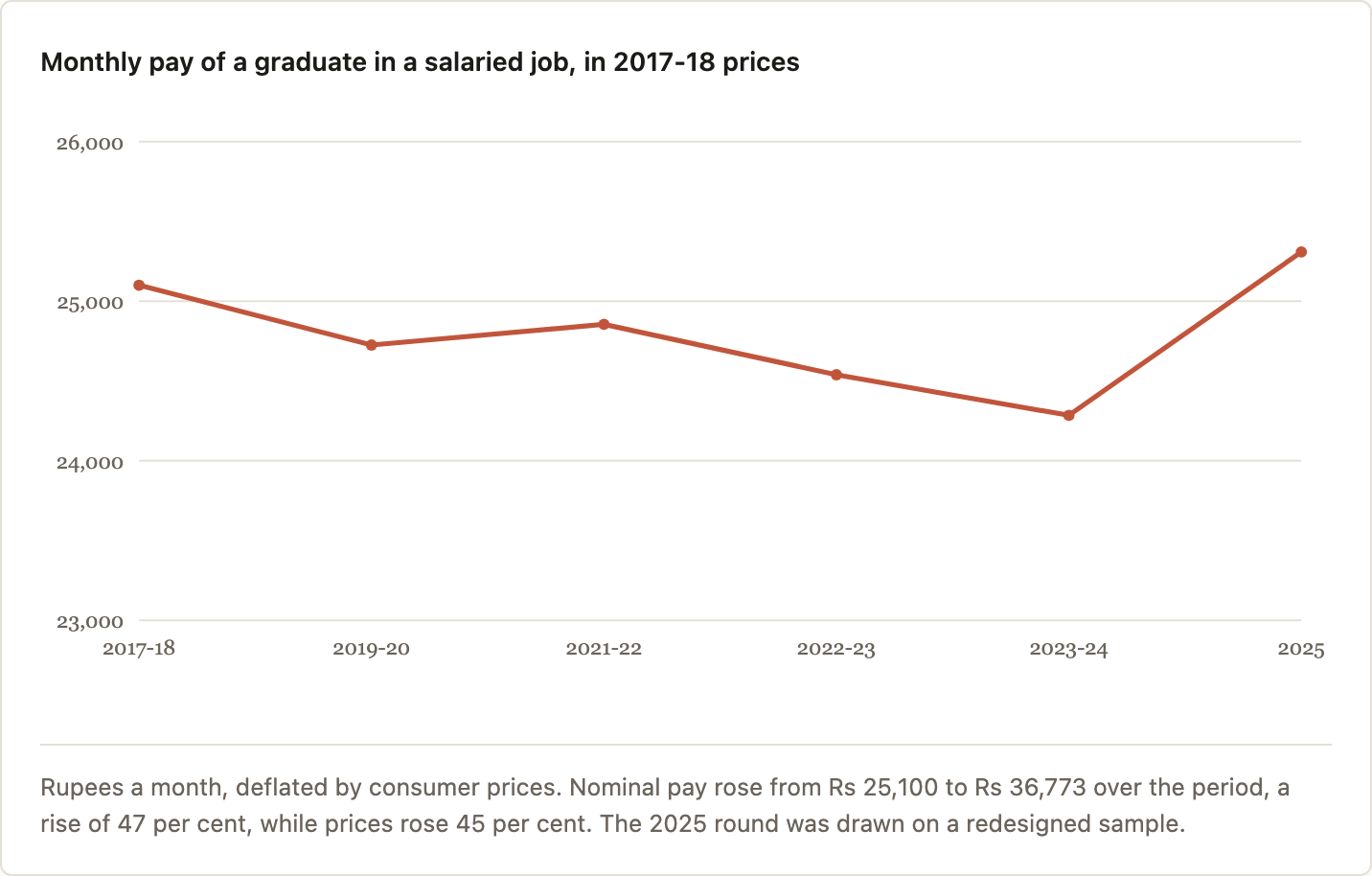
The salaried job carries less than the word implies.
A tenth of graduates in salaried work earn ₹10,000 a month or less. Many of these jobs come without the things a salaried job is supposed to bring.
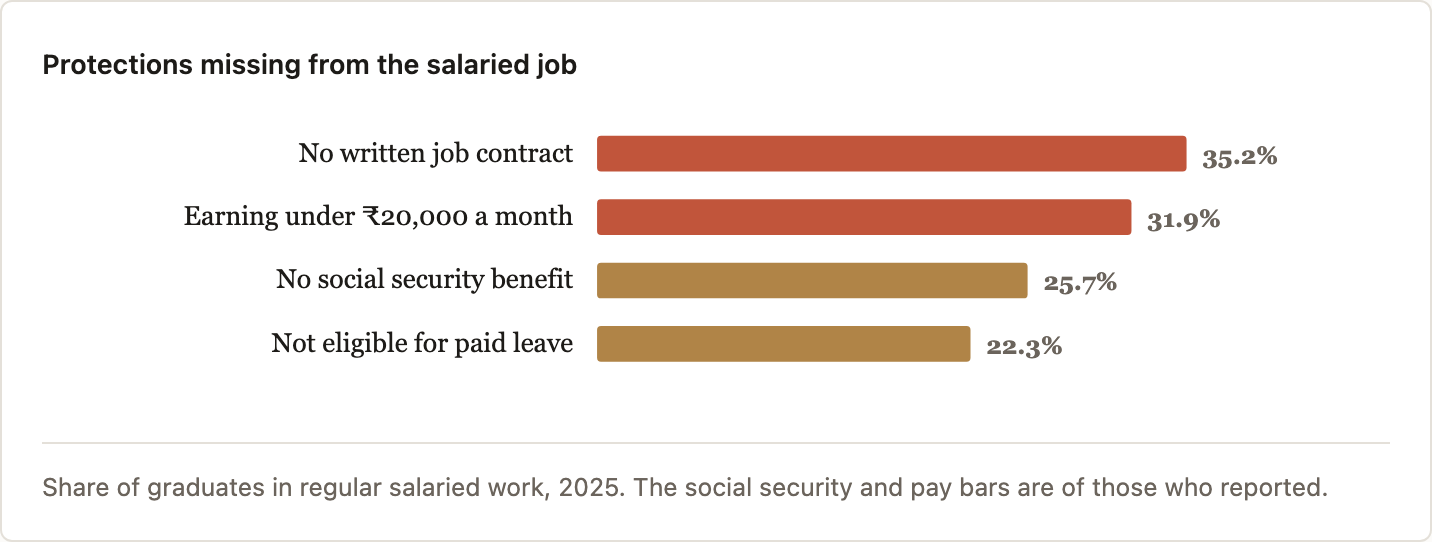
A degree still opens the door. What is behind it offers less than the word salaried implies.
Aspiration is outrunning the route
India is ratcheting up aspirations faster than its ability to meet them. We promised a better life with a college degree and Indians responded at considerable sacrifice. The promise was not illusory: services grew, and the graduates who reached a salaried job took the best-paid work in the country. But the route stayed too narrow for the aspirations that growth itself created. There are not enough secure, well-paid salaried jobs to absorb a graduate population six times what it was. That is the limit of the current development path, and technology will press on it harder.
The posts that follow will look at how the Indian economy has changed since liberalisation, why a model that once may have worked no longer does, and some thoughts on what can be done about it.